New South Yorkshire support group launched for people living with under-researched mood disorder
A young woman from Sheffield who suffers from the pre-menstrual condition has launched a support group, joining a national campaign to raise awareness.

.
.
.
A young woman from Sheffield will lead a new South Yorkshire support group, which is one of 31 around the UK supporting people with Pre-Menstrual Dysphoric Disorder (PMDD).
Emma MacNay, 31, suffers with the condition herself. She decided to set up her own group after finding it difficult to access support for the debilitating symptoms she was experiencing every month.
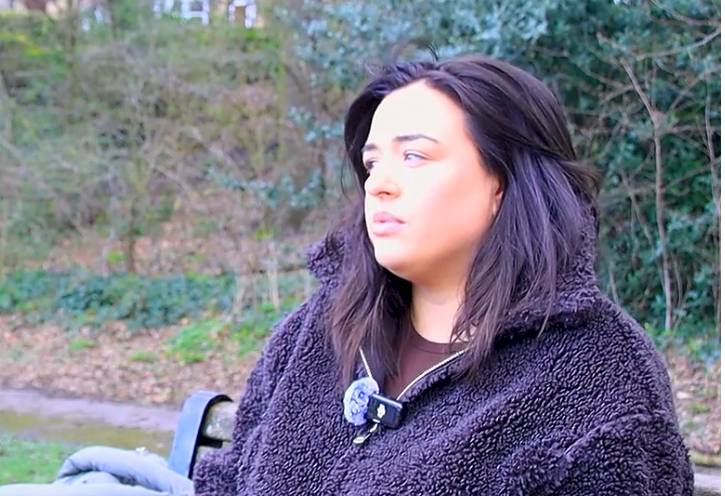
Emma MacNay describes what it's like to live with PMDD.
Emma MacNay describes what it's like to live with PMDD.
"It's like a shame spiral"




What is PMDD?
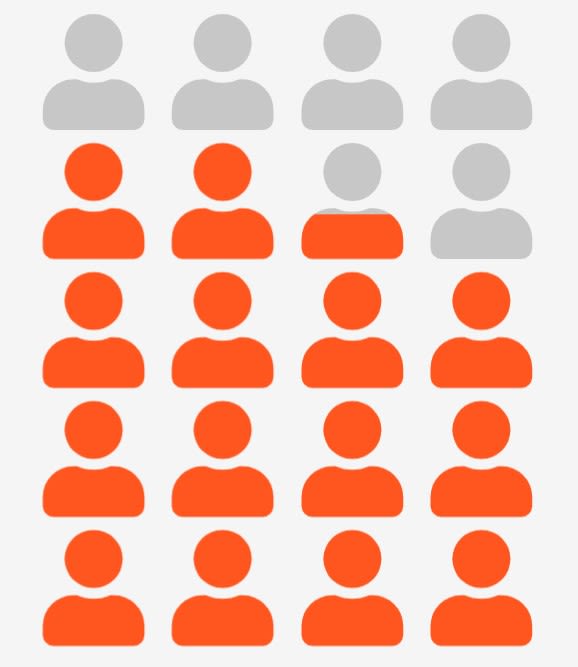
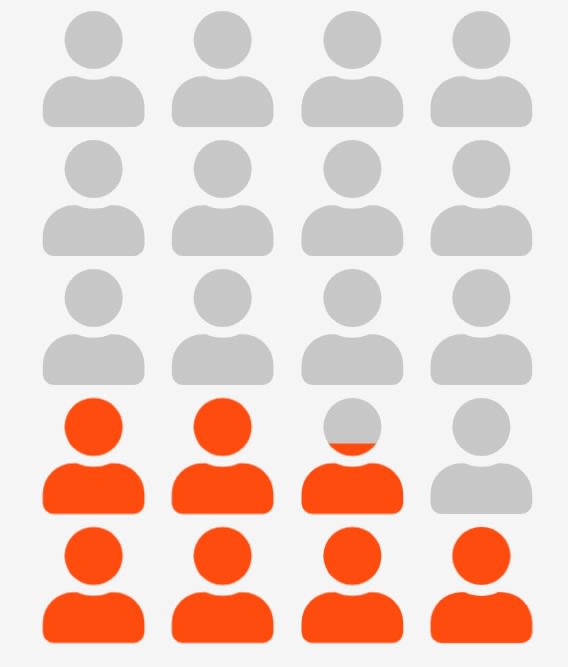
PMDD is a debilitating mental health condition caused by an increased sensitivity to the hormonal fluctuations that occur during the menstrual cycle. Despite the condition impacting one in 20 people who menstruate, awareness of the condition is limited, and it takes an average of 12 years to get a diagnosis.
This means people are living with debilitating and distressing symptoms for years, without knowing the cause or being able to access medical support and treatment.
PMDD causes extreme psychological, cognitive, and somatic symptoms every month. Here are the most common.
A social media explainer about PMDD.
Whilst symptoms lift within a few days of menstruation starting, PMDD-sufferers are then left to pick up the pieces of the psychological chaos of the luteal phase. The impacts of PMDD on relationships, work, and education are long-lasting and return as regularly as the symptoms themselves.
“It’s like a shame spiral afterwards,” Ms MacNay explains. “You feel bad, there’s fractures in relationships that you need to now mend.”
Research
There is still a long way to go to raise awareness of PMDD, decrease the diagnosis delay, and remove the stigma that surrounds the condition. But a small group of academics is paving the way.
Two of these are Julie Riddell from the University of St Andrews, and Dr Lynsay Matthews, from the University of the West of Scotland.
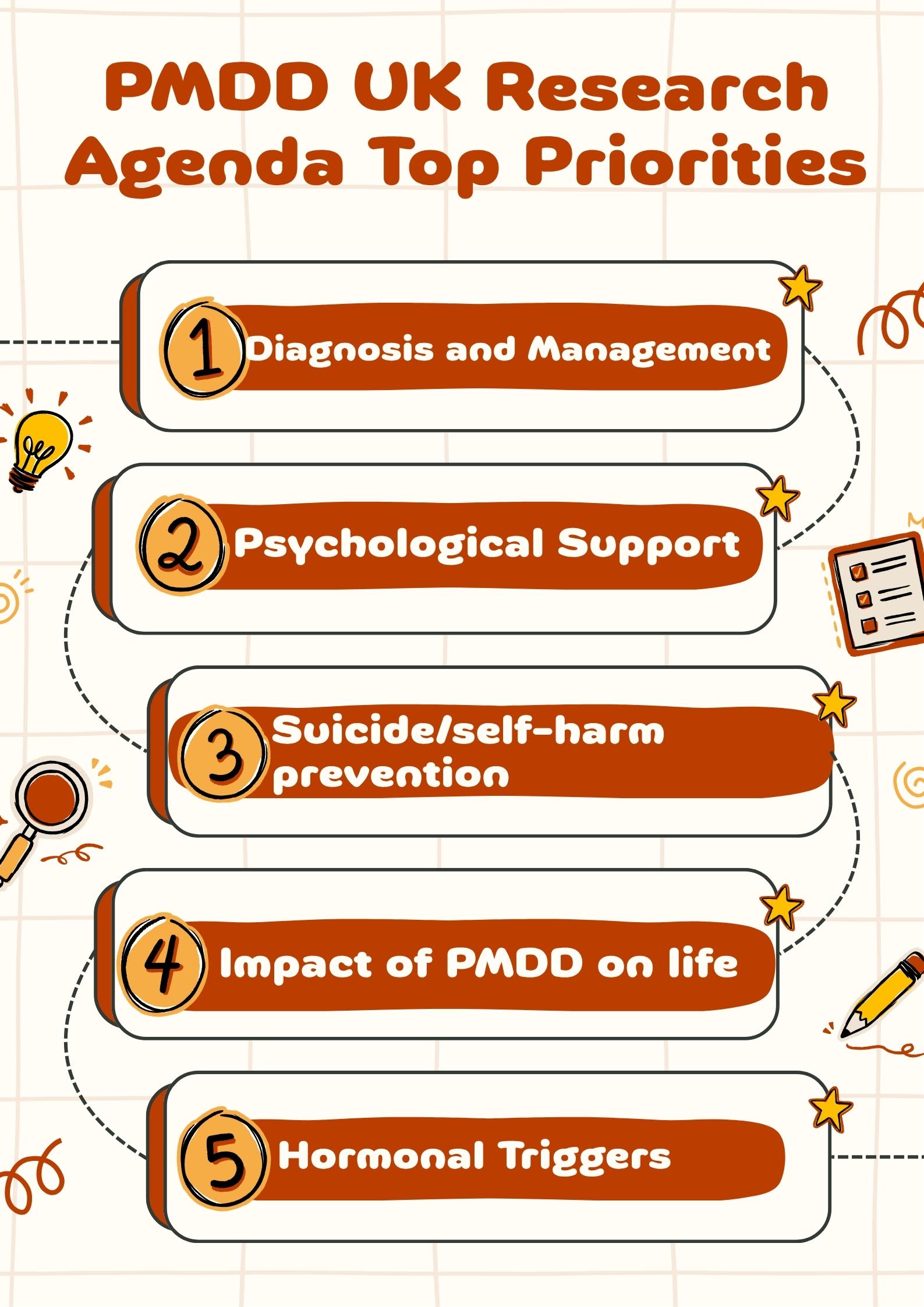
The pair developed the UK Research Agenda for PMDD, which identified five main priorities for future research into the condition. Now, the pair are working to address these, including developing specialist suicide prevention support for people with PMDD, and an online training module about hormones and mental health for students at a leading medical school.
Miss Riddell talks about the training she is developing for medical professionals following the priorities identified by the UK PMDD Research Agenda.

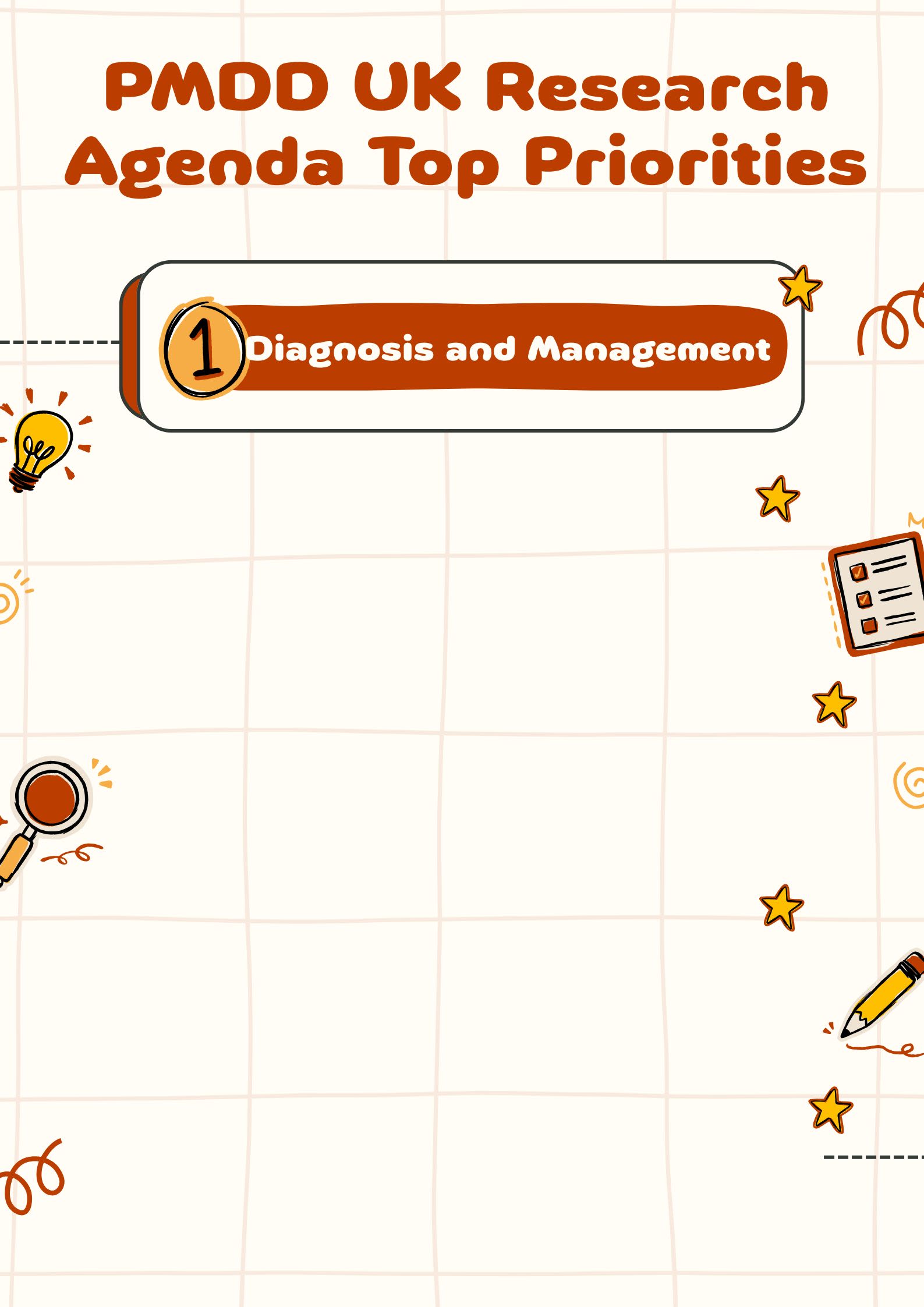
Key priorities highlighted by the UK PMDD Research Agenda.
Key priorities highlighted by the UK PMDD Research Agenda.
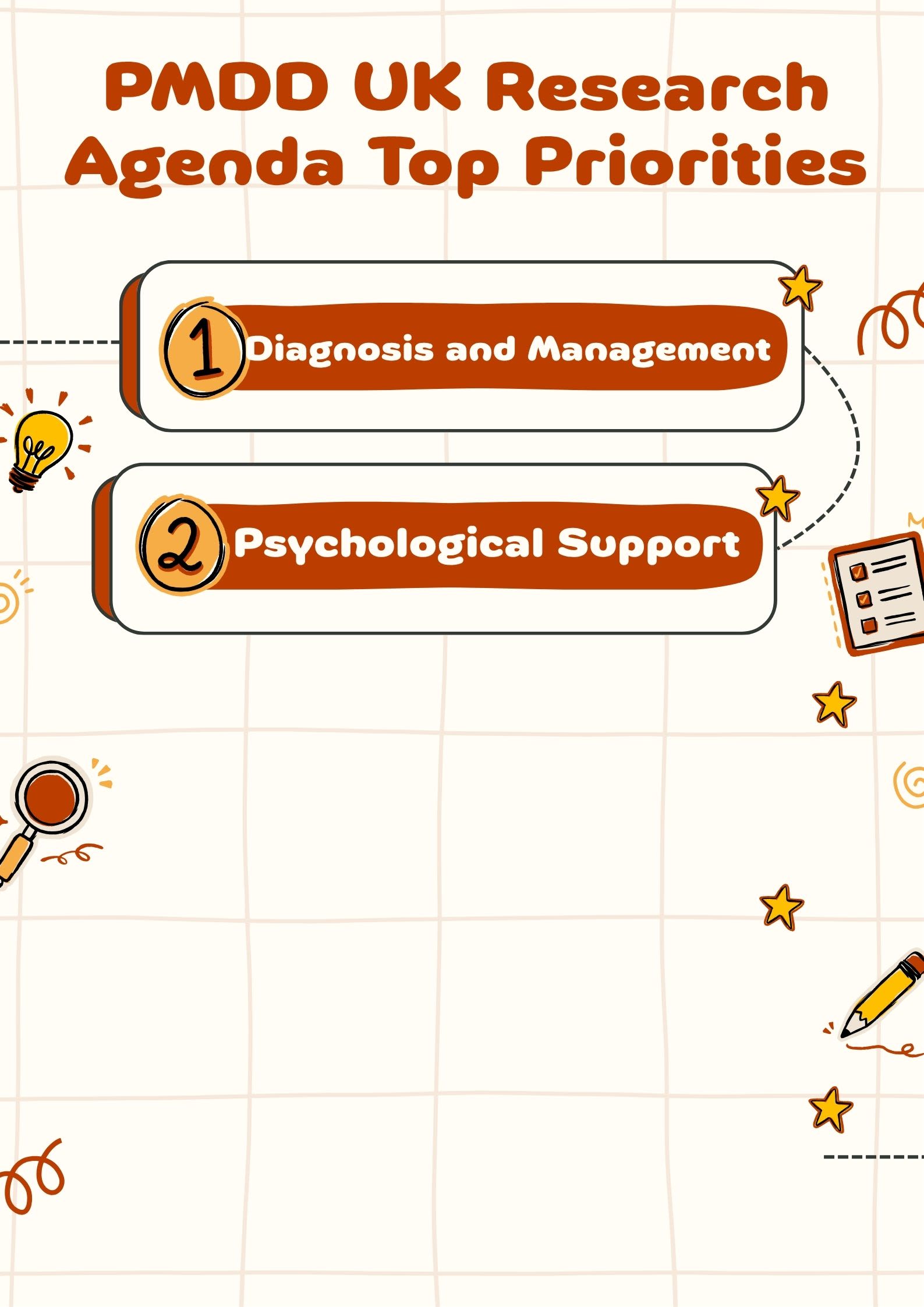
Key priorities highlighted by the UK PMDD Research Agenda.
Key priorities highlighted by the UK PMDD Research Agenda.
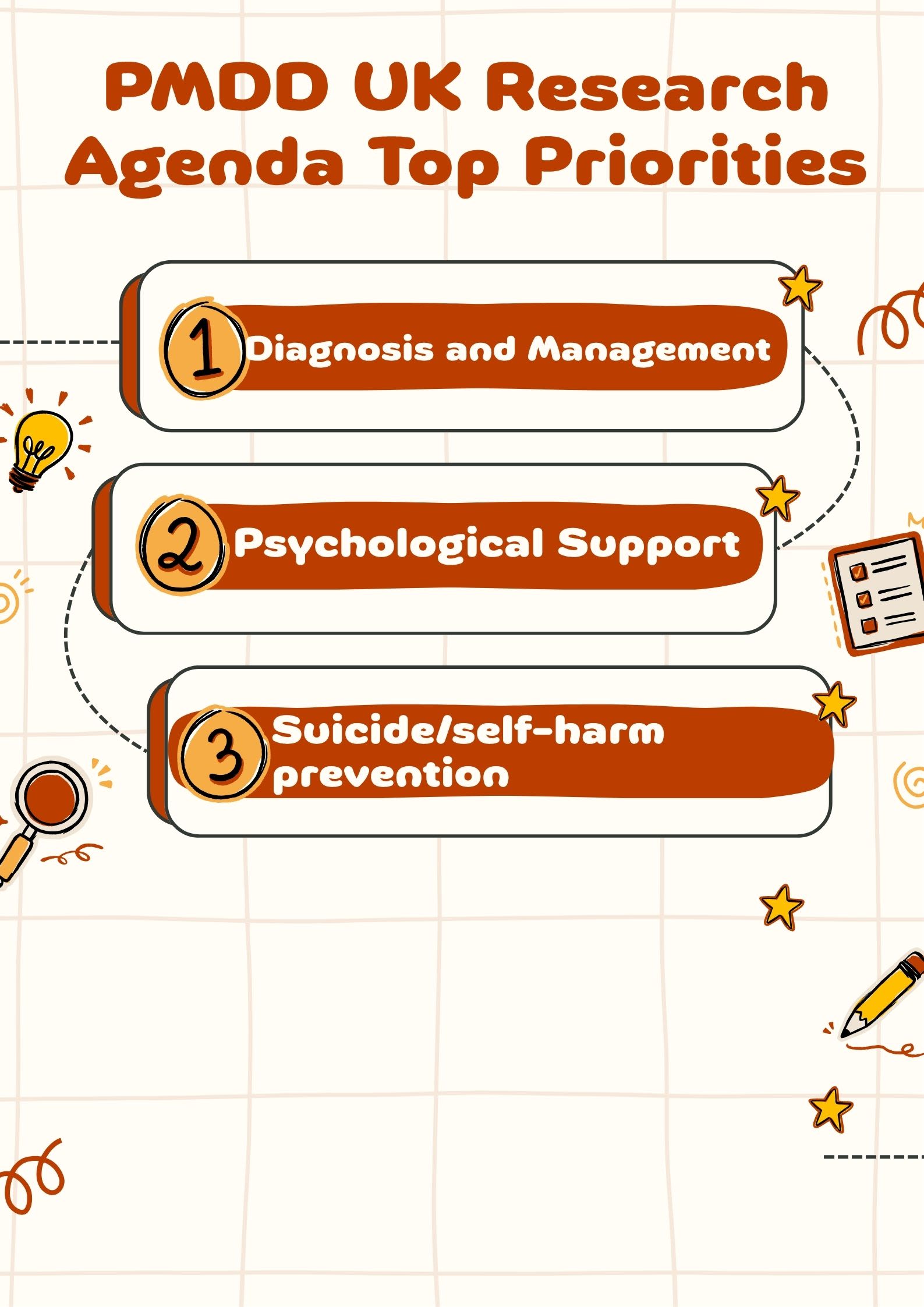
Key priorities highlighted by the UK PMDD Research Agenda.
Key priorities highlighted by the UK PMDD Research Agenda.
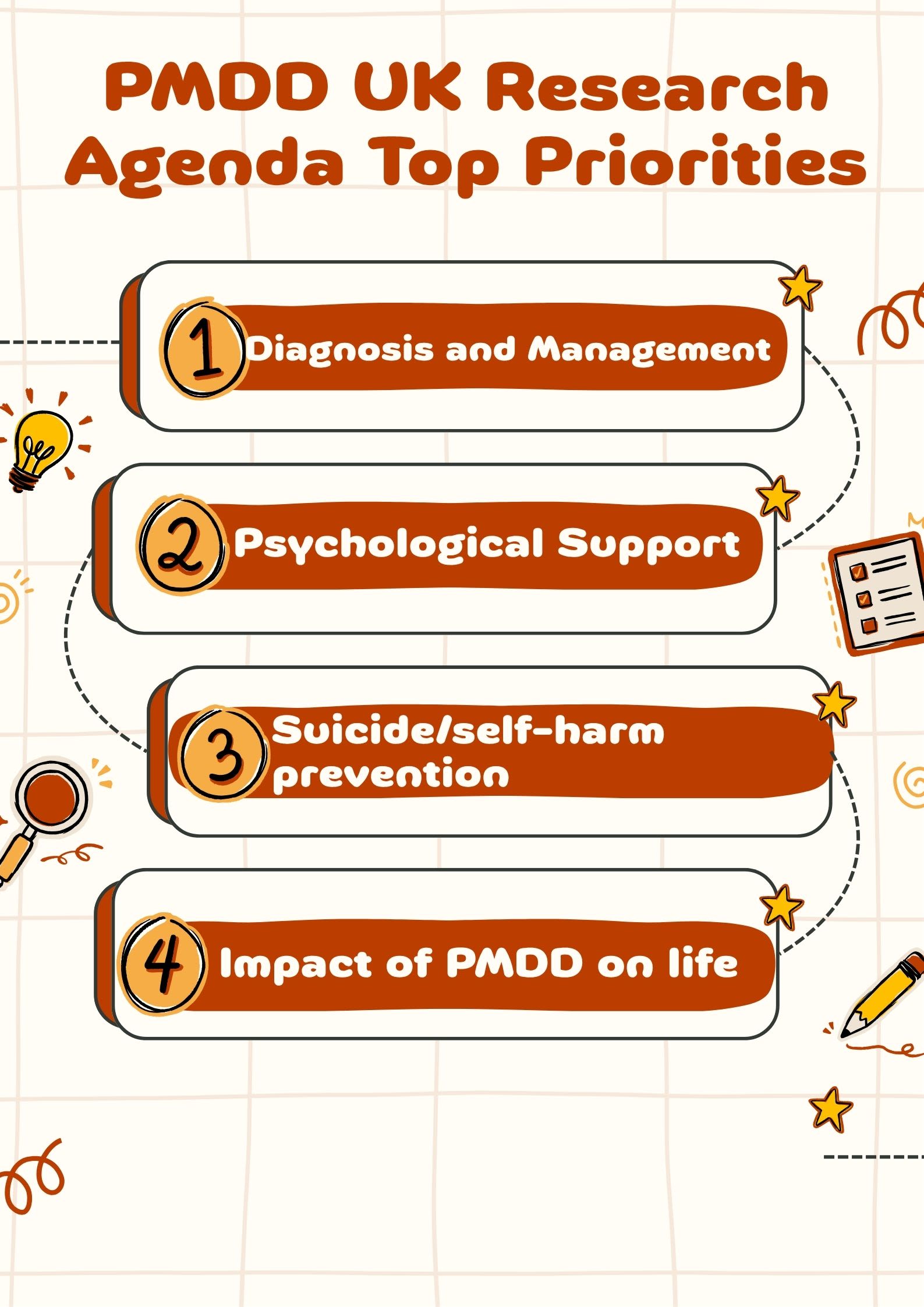
Key priorities highlighted by the UK PMDD Research Agenda.
Key priorities highlighted by the UK PMDD Research Agenda.
Key priorities highlighted by the UK PMDD Research Agenda.
Key priorities highlighted by the UK PMDD Research Agenda.
Until initiatives like these can be fully realised, people with PMDD can turn to community-led support networks. These include regional groups like Ms MacNay's, which offer a safe space for people with PMDD to talk to others who understand what they’re going through.
Ms MacNay hopes that her new South Yorkshire group will help people to navigate the diagnostic process and learn from each other how to manage their symptoms, providing a community for what can be a very isolating condition.
Eleanor Rodgers, 26, who runs the PMDD Project's Manchester support group, explains how validating the groups can feel: “It’s so hard to understand if you’ve not experienced PMDD for yourself. I’ve run two groups so far, and I’ve got a lot out of them. It’s been really lovely to see everyone talking.”

Ms Rodgers describes her experiences.
Ms Rodgers describes her experiences.
Eleanor's Story


Eleanor Rodgers runs the PMDD Project's Manchester support group and suffers with the condition.
Eleanor Rodgers runs the PMDD Project's Manchester support group and suffers with the condition.
"Knowledge can give people hope"

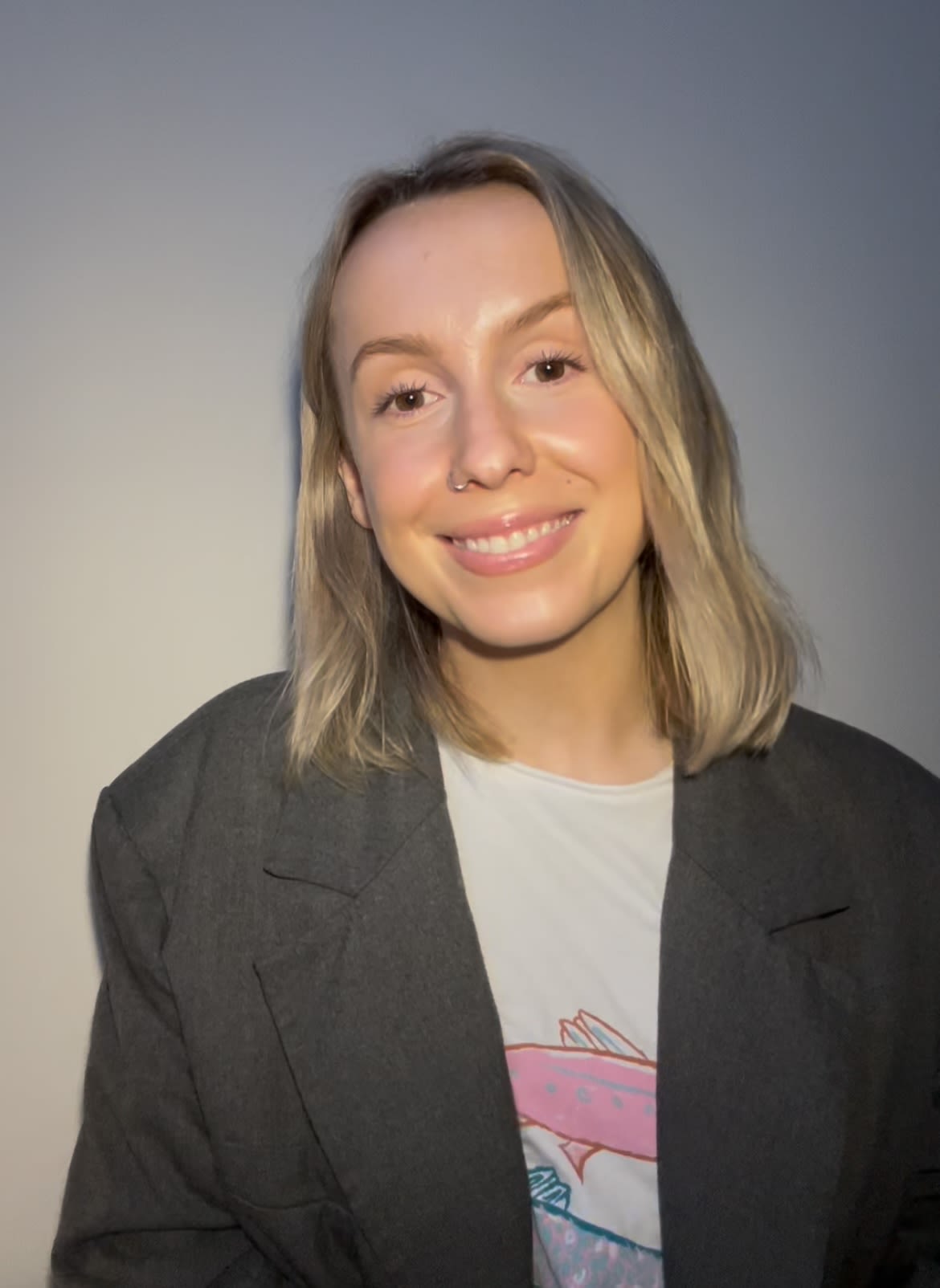
Phoebe Williams founded the PMDD Project in 2024 to make information about the condition more accessible.
Phoebe Williams founded the PMDD Project in 2024 to make information about the condition more accessible.
As well as community support, the PMDD Project provides practical resources for people suffering from the condition, from free online guides about cycle tracking and diagnosis, to campaigning with policy-makers and academics for a greater recognition of the disorder. It is the UK’s first charity focused on the disorder.
The organisation started in April 2024 when founder Phoebe Williams, now 29, decided it was time to take matters into her own hands.
Since then, it has grown to a team of 45 volunteers, all working to achieve the charity's three main goals of raising awareness, providing support, and encouraging research.
This includes policy work, which has just contributed to PMDD being included in the government’s Women’s Health Strategy.
On an interpersonal level, Ms Williams believes the charity’s regional support groups can help people with PMDD to live normal lives.
“Knowledge can give people hope,” she says.

PMDD Project logo.
PMDD Project logo.
Support for PMDD on Social Media
Outside of the PMDD Project, the work of influencers is central to raising awareness.
Charlotte Sampson, 33, was inspired to set up her own social media page after something she saw online made her realise she had the condition. “I learnt about PMDD from a TikTok,” she says.
She now runs the page, What a Bloody Mess, with her friend, who has endometriosis. The pair has gained nearly 1,000 followers since starting the account last year and has successfully built a network of people supporting each other through hormone-related conditions.
“The number of women we’ve connected with is amazing. It makes me really angry that there are that many women out there who need support,” she says.

Ms Sampson describes her experiences living with PMDD.
Ms Sampson describes her experiences living with PMDD.
Ms Sampson wants to use the platform to advocate for better treatment options for people with PMDD, after her own experience with traditional medical support was distressing.
She was offered cyclical anti-depressants and hormonal medicines like the contraceptive pill. Doctors told her that if none of these options worked, she would have to undergo a medical menopause, where her ovaries would either be surgically removed or blocked from producing hormones with chemical treatment.
This prospect was incredibly upsetting, as she hopes to have children in the future. She hasn’t returned to the doctor’s since.
Medical professionals caring for people with PMDD often have to navigate a landscape where evidence-based treatment options are limited.
North Derbyshire-based General Practitioner, Dr Stephanie Baron, says that antidepressants, which can be consumed cyclically for conditions like PMDD, are the most evidence-backed treatment option.
“The problem is that it’s hard to refer people to more specialist services until they’ve tried antidepressants, as these are the most researched option,” she explains.
Beyond this, GPs can refer people to counselling services to develop strategies to manage their symptoms.
In a context where traditional support is lacking, local support groups like Ms MacNay's are filling in the blanks, giving people space and strategies to make life with PMDD more manageable.
"I learnt about PMDD from a TikTok"
Ms MacNay talks about her reasons for starting the South Yorkshire support group.
For information on local support groups run by the PMDD Project, contact them at general@thepmddproject.org
If you or a loved one is struggling with suicidal ideation, contact the Samaritans on 116 123. Alternatively, text SHOUT to 85258.
The group will serve PMDD-sufferers in the whole South Yorkshire region - including Sheffield, Barnsley, Rotherham, and Doncaster. Meetings will be held at the Goose Wellbeing Centre in Dinnington, a central location for all of these areas.
The next meeting for the South Yorkshire group takes place on 21 May. You can find out more and follow Emma’s journey here.

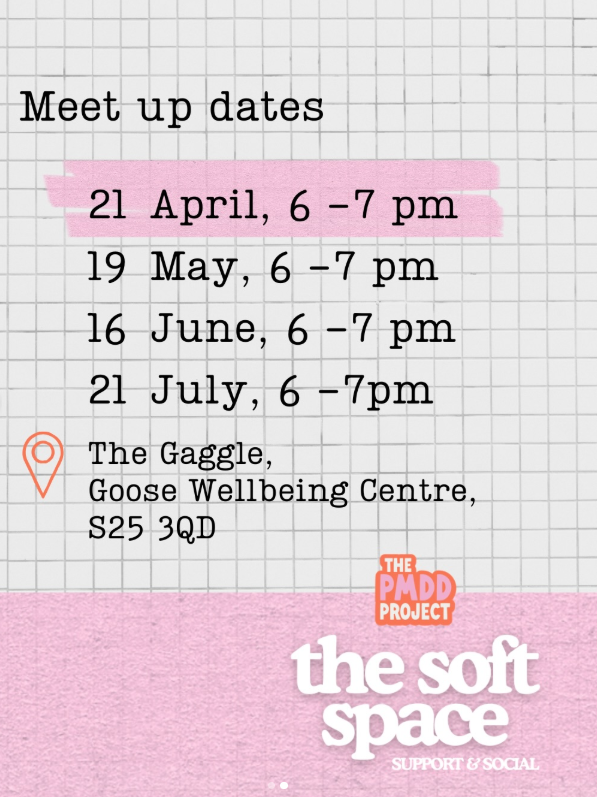
Dates for the South Yorkshire support group. Please note that May's social has been rescheduled for Thursday 21.
Dates for the South Yorkshire support group. Please note that May's social has been rescheduled for Thursday 21.
 Built with Shorthand