The Global Battle for Renewable Supply Chains
How the UK, US and China are all fighting to control our green future and their plans to do it.

Times are changing, and with this, so does our technology. The United Kingdom and the United States are trying to fight back against China in the race for renewable energy and their supply chains.
On the surface, it outputs a facade that they can combat climate change, but at its core, it's governmental competition that affects jobs, economics, and geopolitical power. The green movement has turned turbines and solar panels into assets and weaponry. The UK, China and the United States are playing the green tug of war.
The Green(er) UK under Labour

Renewable energy is energy in the forms of solar, hydroelectric and wind.
These renewable energies have all seen a rise in the UK, and were a selling point to many people embedded in environmental safety and renewable energy to vote in a Labour government over the long-standing Conservative Government, which prioritised the Oil and Gas industry rather than the emerging renewable market and decarbonisation goals of the United Kingdom.

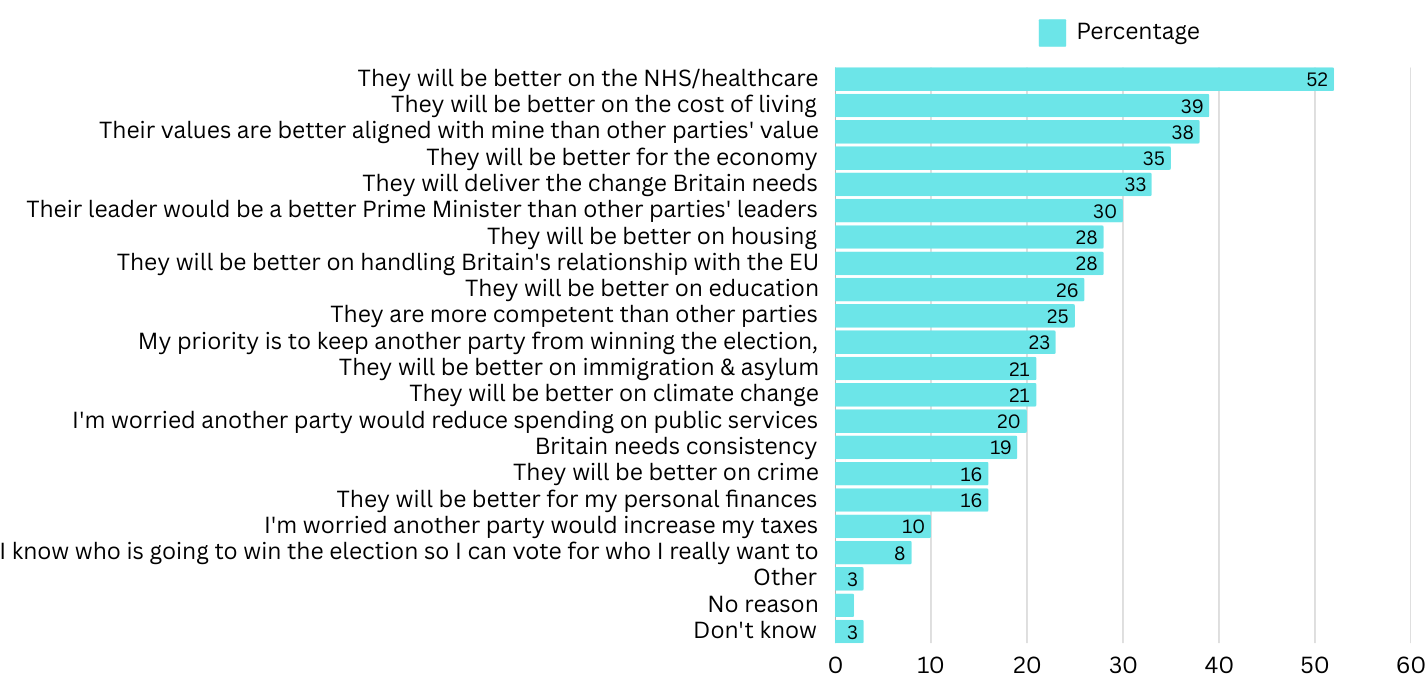
Data from ipsos.com about Online British adults aged 18+ who would consider voting for the Labour Party in the next General Election, 26 – 27 June 2024 - Graph from Max Astle
Data from ipsos.com about Online British adults aged 18+ who would consider voting for the Labour Party in the next General Election, 26 – 27 June 2024 - Graph from Max Astle
With a study from Ipsos.com reporting that 21% of all possible Labour voters found that the environment was an important reason to vote for Labour in the 2024 General Election.

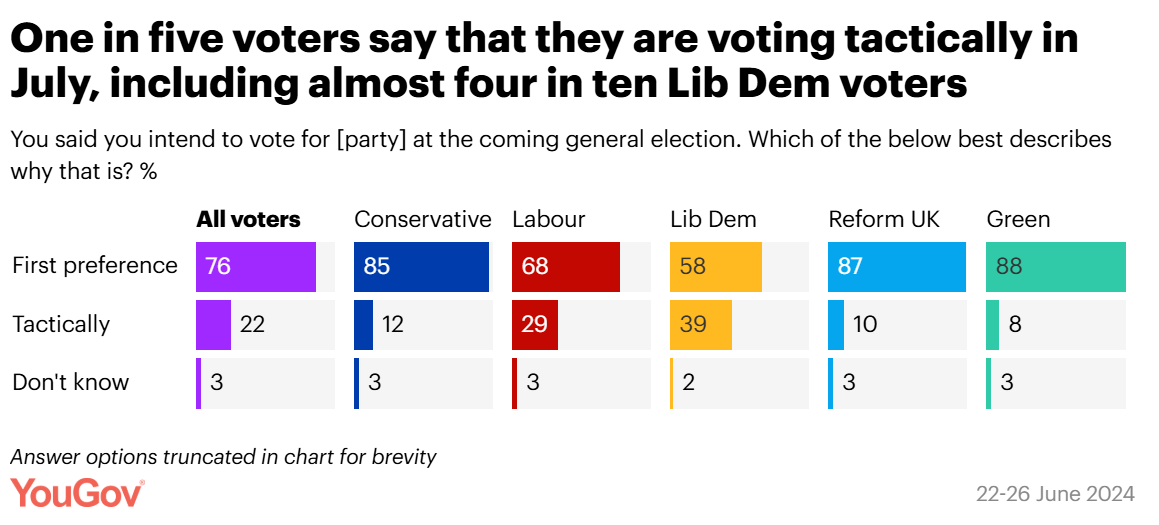
Graph from yougov.co.uk about who voters intend to vote for [party] at the general election.
Graph from yougov.co.uk about who voters intend to vote for [party] at the general election.
This was followed by a YouGov Study that showed that on average 'One in five voters' would vote tactically in the election to 'try and keep a Tory out of their constituency.' With Labour and the Liberal Democrats both having plans in their manifestos for clean and renewable energy.

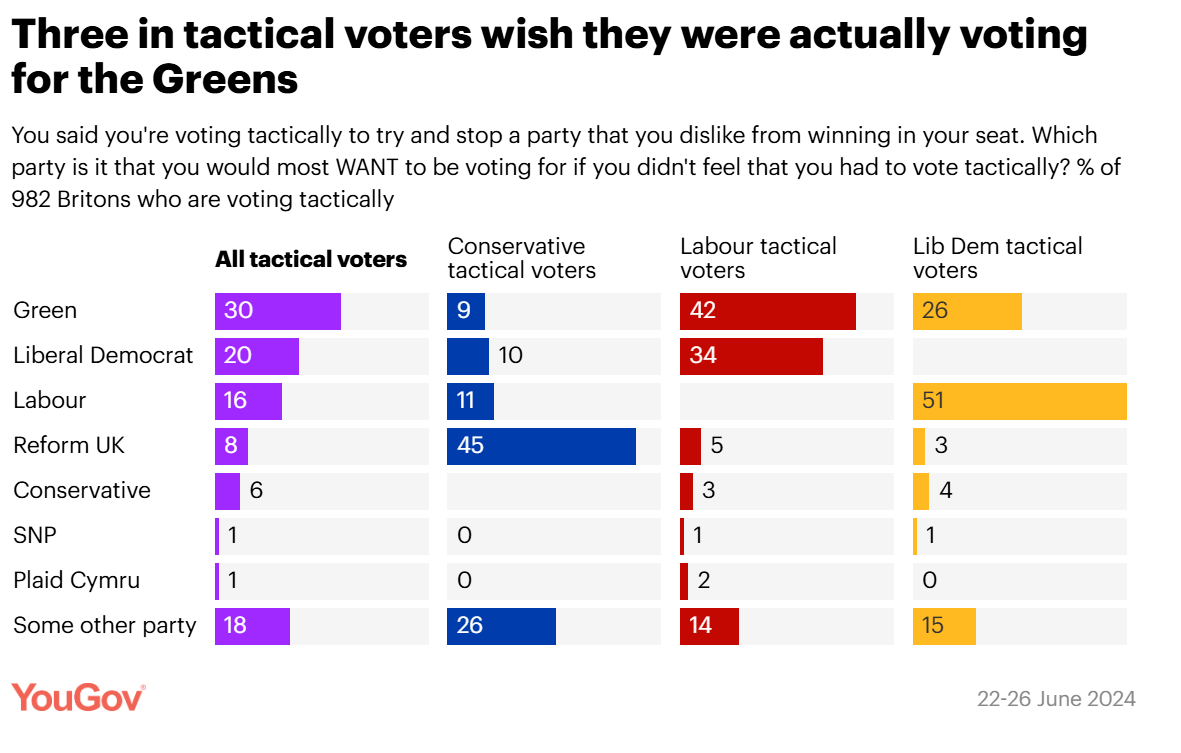
Graph from yougov.co.uk about which party you would most want to vote for if you didn't feel that you had to vote tactically.
Graph from yougov.co.uk about which party you would most want to vote for if you didn't feel that you had to vote tactically.
This was then continued further in the YouGov Study that out of the group of tactical voters, the party they most wanted to be voting for if they didn't have to vote tactically would have been the Green Party. This Party is known for its forward facing agenda against climate change and a push toward renewable, clean energy solutions and infrastructure.
The UK's Labour government wants to become a powerhouse of renewable energy and for this, you need to be an ethical staple of renewable energy supply chains.
However, with the volatile market for rare earth minerals and the ethical issues surrounding them, is the government doing enough to sustain itself and reach its goals sustainably and ethically?
The experts disagree.
Dr Enrico Vanino, an associate economics professor at The University of Sheffield, said: "The manufacturing capacity of the UK has been shrinking since the 70s continuously and the manufacturing sector accounts for 20% or even less nowadays for the overall GDP of the United Kingdom."
Global advisory company Willis Towers Watson provides data-backed solutions about capital and risk. They published their 2023 Renewable Energy Supply Chain Risk Report, and the conclusion was clear.
The volatile price of raw materials, supply chain shortages, gridlocks and delays, all point to the future of renewable energy being at risk.
Dr Vanino continued: "We don't have a competitive advantage in that sector [renewable energy supply chain]. We don't have the capabilities. The only thing the UK government could possibly do is to attract foreign investment."
'Possibly it's too late' according to Dr Vanino as he believes the UK may have waited too long to become a global powerhouse in the renewable supply chain market.
The government know this may be the case, so their next best solution is to become a leader in the renewable energy sector by becoming a 'clean energy superpower', but is this feasible?
The Labour government set up and released Clean Power by 2030, set up by Ed Miliband, and its ambition is to make the UK a greener country with its renewable energy sources.
The report outlines that this 'will generate enough clean power to meet our total annual electricity demand, backed up by unabated gas supply to be used only when essential' with clean sources producing at least 95% of Great Britain’s electricity.
This includes needing around 50 GW of offshore wind capacity, which is around 35 GW more than we have available at the moment.
Global renewable industry leader for mechanical seals, which are used in renewable energy products, ASSEALS Group Engineering Director, Stephen Shaw, said: "Now, our current energy minister, who is the right honourable minister for Doncaster Ed Miliband, he has decided we're having more wind turbines because that's what he believes is going to be the right way.
"Now, first of all, we generate more power from wind turbines currently than what we can use today.
"That is a fact.
"We don't need any more wind turbines. We need to get the power from the North and in Scotland where they generate the power, down to the Southeast and London, where they need to consume the power, but the infrastructure is such that they cannot do that, so he wants to generate more wind power and put more pylons up and stick them all across everybody's land.
"Now they do not understand it. "
This can be shown in Statista's research on the mean domestic electricity consumption per household in Great Britain in 2022 by region, which categorically shows that the further south you go in England, the more electricity is used on average, whereas the further north you go in England, it decreases.
According to the National Energy System Operator (NESO), Great Britain’s monthly electricity statistics for December, wind was the UK's highest source of energy generation contributing 38.9%, but renewable energy only supplied the UK with 48.6%.
In the year 2000, renewable energy sources accounted for 2.8% of the total electricity generated in the UK in a report published by the Parliamentary Office of Science and Technology. This shows not only a significant difference over the last 24 years, but also shows an improvement of 45.8% in the use of renewable energy supply and usage.
Mr Shaw continued: "I have asked this question of every MP that I've been able to get in front of, including the MP who put the legislation through parliament, Chris Skidmore. I asked what it means when we say that the UK will become net zero through its operations by the year 2050.
"And not one MP can answer the question, what does it mean to be net zero through our operations by the year 2050. Nobody knows.
"Unless you can get some technology to capture the carbon, we can't use hydrogen. So we don't have a coherent plan at the moment to get this country to net zero."
Mr Shaw then explained further that even though there are carbon capture machines available, it's not efficient.
This is due to research about direct air capture (DAC) that estimated that using DAC would require 448EJ (exajoules) to run and capture the 462EJ used by fossil fuels in 2020, according to calculations by Australian maths-as-a-service company Keynumbers.
This figure of 448EJ is equivalent to 124,444TWh which is 4.2 times the annual global electricity consumption in 2023, which was 29,471TWh according to Ember.
These figures do not include the energy needed to transport and store the CO2 effectively.
The experts have told us this parade for "Net Zero" and becoming a staple of renewable supply chains, at the core is a governmental scheme, which paints the United Kingdom in a positive light for other countries to follow suit, when in reality there is no plan and no path to follow.

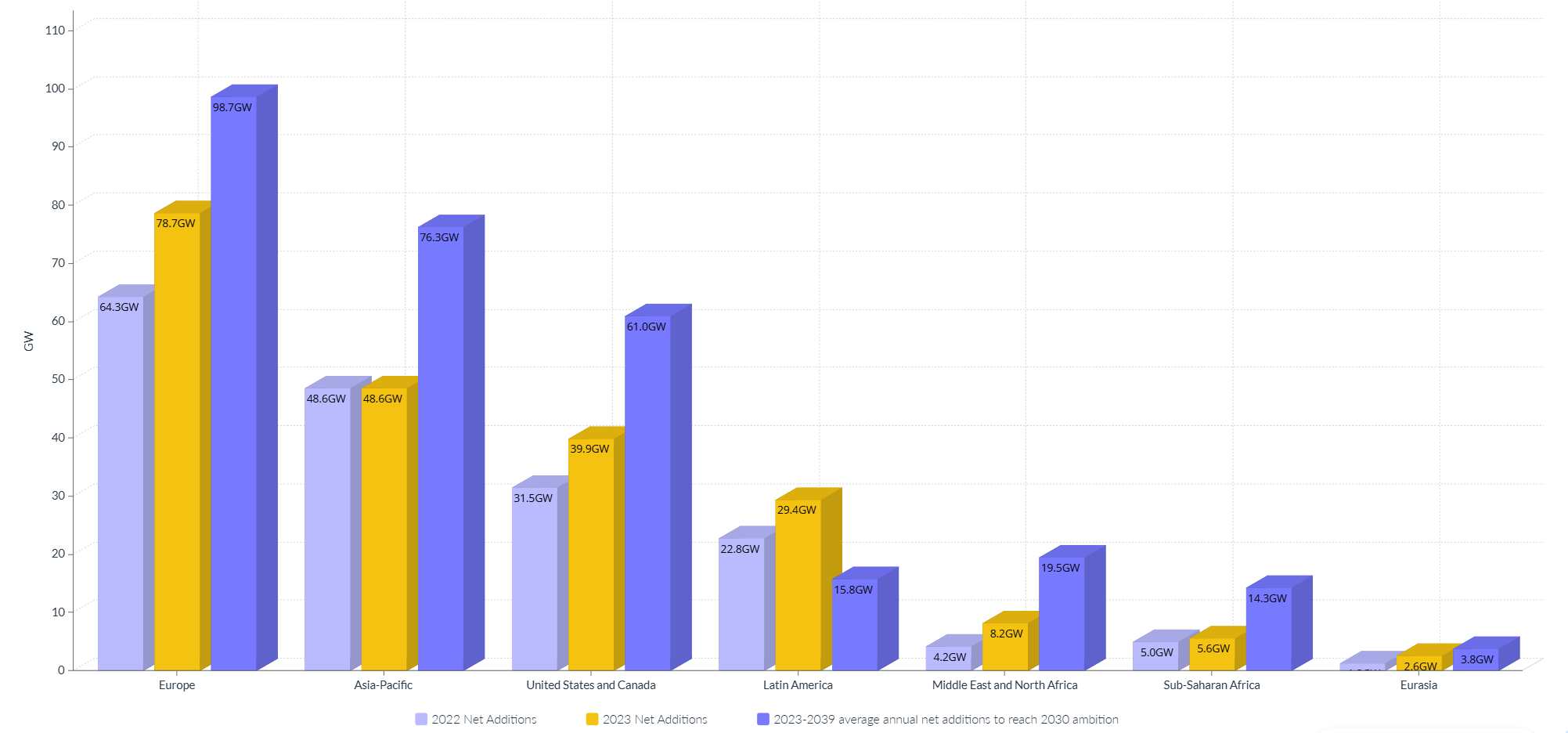
Data from IEA.org about annual and average net renewable capacity additions needed to realise ambitions, by selected country/region, 2022-2030 - Graph by Max Astle
Data from IEA.org about annual and average net renewable capacity additions needed to realise ambitions, by selected country/region, 2022-2030 - Graph by Max Astle

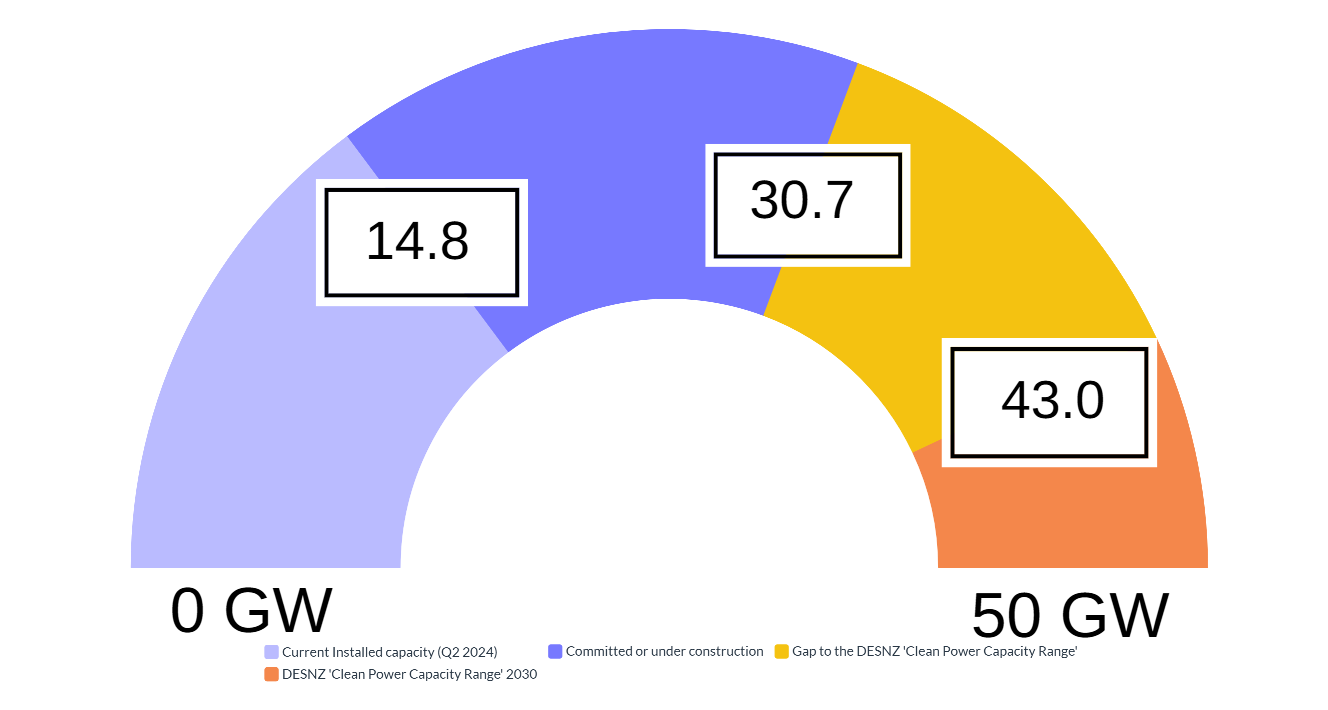
Data from assets.publishing.service.gov.uk about the phases of the installed and under construction of offshore wind in the UK and the gap to reach the Department for Energy Security and Net Zero - Graph by Max Astle
Data from assets.publishing.service.gov.uk about the phases of the installed and under construction of offshore wind in the UK and the gap to reach the Department for Energy Security and Net Zero - Graph by Max Astle


Solar panels in Sheffield via Max Astle
Solar panels in Sheffield via Max Astle

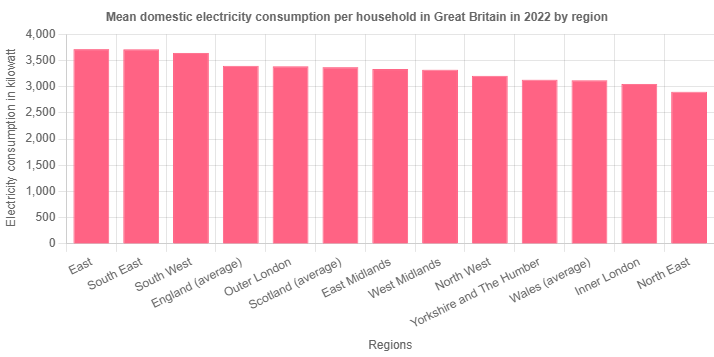
Data taken from statista.com about Mean domestic electricity consumption per household in Great Britain in 2022, by region - Graphed by Max Astle
Data taken from statista.com about Mean domestic electricity consumption per household in Great Britain in 2022, by region - Graphed by Max Astle
Trump's 'Radical Opposition'



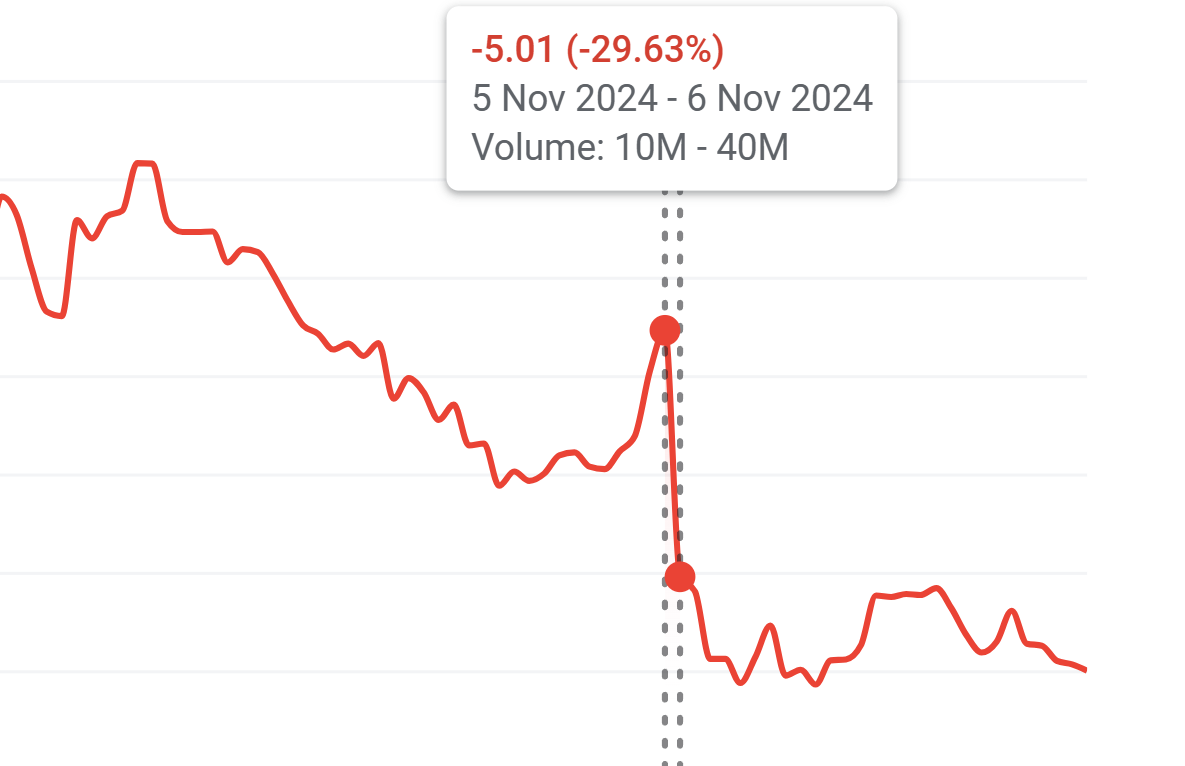
Sunrun's stock fall - taken by Max Astle
Sunrun's stock fall - taken by Max Astle
In the United States things have shifted in the opposite direction.
With the election results being in Trump's favour for a second term, Biden's plan for America to become a renewable supply chain leader has fizzled into anarchy for the approach of fracking and natural gas under Trump.
Why?
This is due to Trump's ‘energy independence’.
This plan has been initiated, with Trump's Energy Department being led by fracking executive Chris Wright.
Mr Wright has publicly supported fossil fuels and their investments while denouncing global warming.
In a LinkedIn post, Mr Wright said: "There is no climate crisis" and disregarded the concept of an energy transition for the world.
But what does this mean for renewable energy in the United States?
Dr Vanino said: “For the United States, especially with the Inflation Reduction Act, which is being implemented by the Biden administration a few years ago. Despite the name calling it the Inflation Reduction Act, in reality, it was a financial package of stimulus to some sectors in particular, to green technology sectors, to renewable energy.
"This new financial package and the subsidies provided by the US government were able to attract many foreign investors into the United States in investing particularly in sectors related to the renewable energy and grid technologies.”
But when Trump’s presidency was announced, Canadian manufacturer Heliene halted a $150 million plan to manufacture solar cells in Minnesota.
This also affected domestic companies like Sunrun, a solar panel and battery storage company whose stock dipped by 29.63% the day after Trump's victory.
What we can see is the United States is in an economic freefall in the renewable energy sector, which has shorted stocks and halted millions of dollars to the economy, due to Trump's vision for fracking and oil for personal short-term success instead of investing in renewables and the supply chain for the future of America.
China's 'Green Empire'

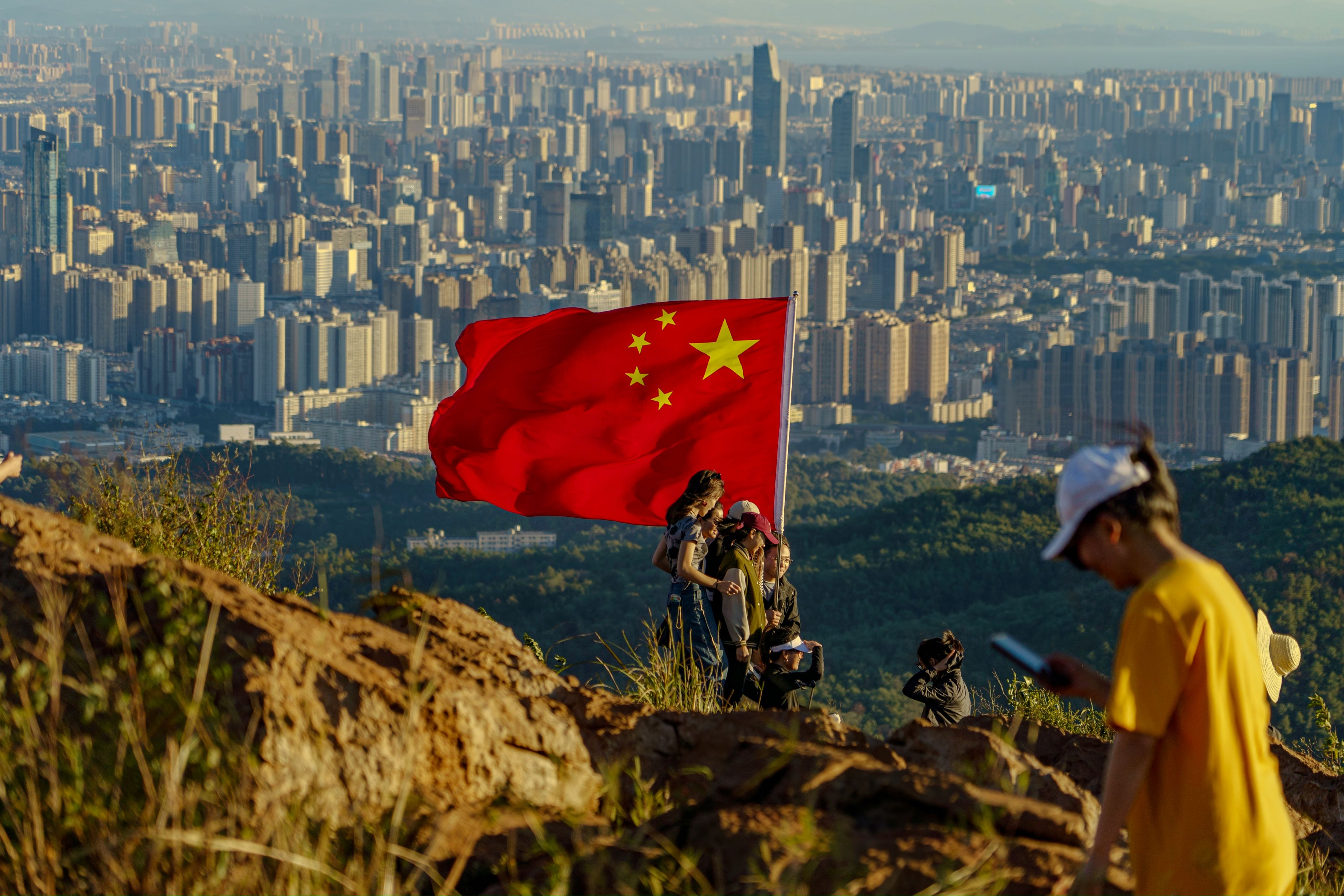
On the other hand, China has become the number one in the renewable energy supply chain sector.
According to data from the National Renewable Energy Laboratory’s 2023 Spring Report, eight out of ten world's largest manufacturers of solar panels are based in China.
China produces and sells solar panels at a rate European and American companies cannot match with the International Energy Agency reporting ‘China’s share in all the manufacturing stages of solar panels exceeds 80%’.
However, China had to make sacrifices to become the leading manufacturer of renewable energy.
These are due to three reasons, subsidies, labour and exploitation.
For over a decade, subsidies have been crucial. In 2022, China’s Ministry of Finance, Liu Kun, issued subsidies worth 2.75 billion yuan (£300mn) for renewable energy production of electricity.
These investments have continued year on year, with Carbon Brief reporting that China's clean energy investments reached 6.8tn yuan (£727bn).
It was announced this February by China's top economic planning agency that they were cutting back their subsidies for renewable energy projects after another boom in solar and wind power installations the previous year.
According to data from the International Renewable Energy Agency, China's installed solar power capacity has increased 45% since 2023, reaching almost 887 gigawatts, which is over six times the capacity of the USA.
These subsidies have enabled China to mass produce and export renewable products at a globally cheaper price, with the International Energy Agency reporting that they are 20% cheaper than their American counterparts, and this also allows the Chinese population to adopt them just as quickly.
Another factor is labour cost, according to a report from the Reshoring Institute on global labour rate comparisons, the median salary for the USA and the United Kingdom is above £23,000, whereas China’s median salary is roughly £10,000.
This means that there is more money going back into the pockets of the renewable companies to reinvest back into themselves, leading to faster production and growth.
But this is only the legal aspect of labour we see.
Research from Anti-Slavery International, Sheffield Hallam University and the Investor Alliance for Human Rights showcased the darker side to China's green labour.
The study found that an extensive majority of solar parts and panels produced globally have had some exposure to state-imposed forced labour of Uyghurs and other Turkic and Muslim-majority people in the Xinjiang Uyghur region in China.
Sales and Marketing manager of Moontown Ltd, a UK manufacturer of energised PTFE sealing systems, Steven Ratcliffe, said: “We found 20 years ago, a big shift towards certain markets going into China purely down to price.”
Finally, exploitation, according to the Congressional-Executive Commission on China, ‘80% of the Democratic Republic of Congo’s cobalt output is owned by Chinese companies’ while ‘25,000’ children are estimated to work in them.
The world relies on China, and it will be that way for a long time unless countries can find a way to match them. This can be seen in the OECD TiVA database 2023 update, which demonstrates and shows that China (CHN) is a gross manufacturer of 35% of all items and adds 29% to the world's value per capita.

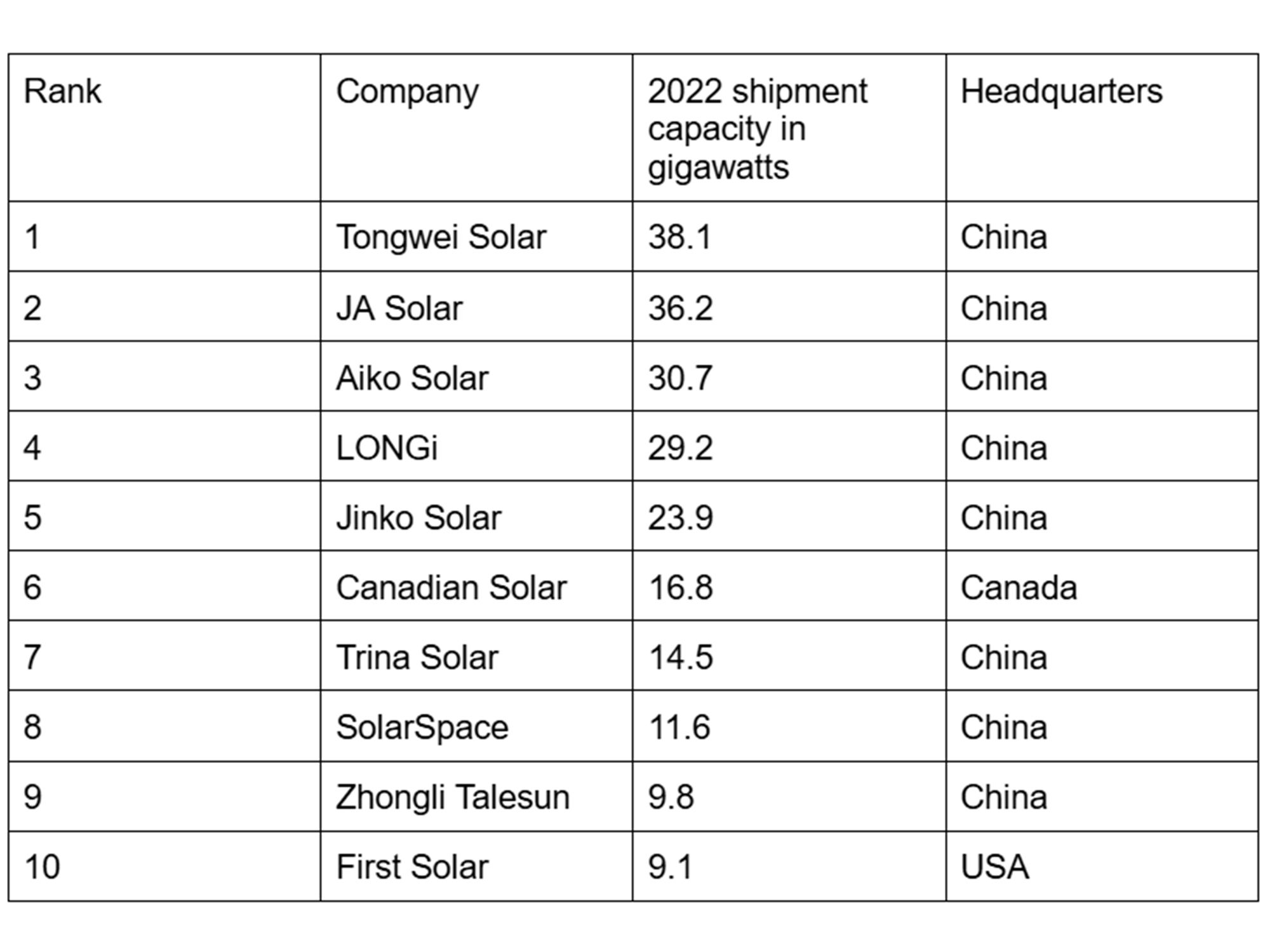
Data from the National Renewable Energy Laboratory’s 2023 Spring Report graphed by Max Astle
Data from the National Renewable Energy Laboratory’s 2023 Spring Report graphed by Max Astle

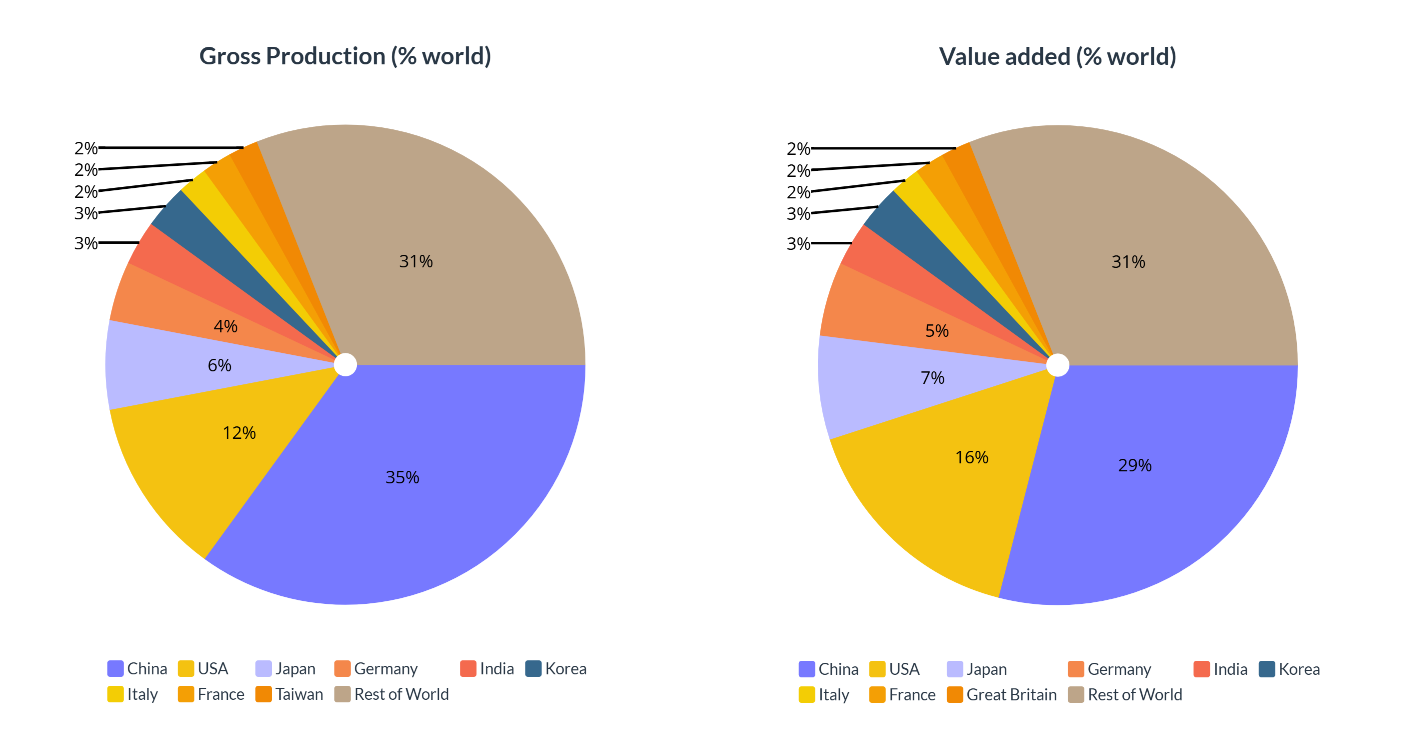
Data from the OECD TIVA database 2023, showing the Author's elaboration of OECD TIVA database 2023, PROD & VALU manufacturing sectors - Graph from Max Astle
Data from the OECD TIVA database 2023, showing the Author's elaboration of OECD TIVA database 2023, PROD & VALU manufacturing sectors - Graph from Max Astle
Where do we go from here?


 Built with Shorthand