
Beyond companionship: how support dogs transform mental health and rebuild lives
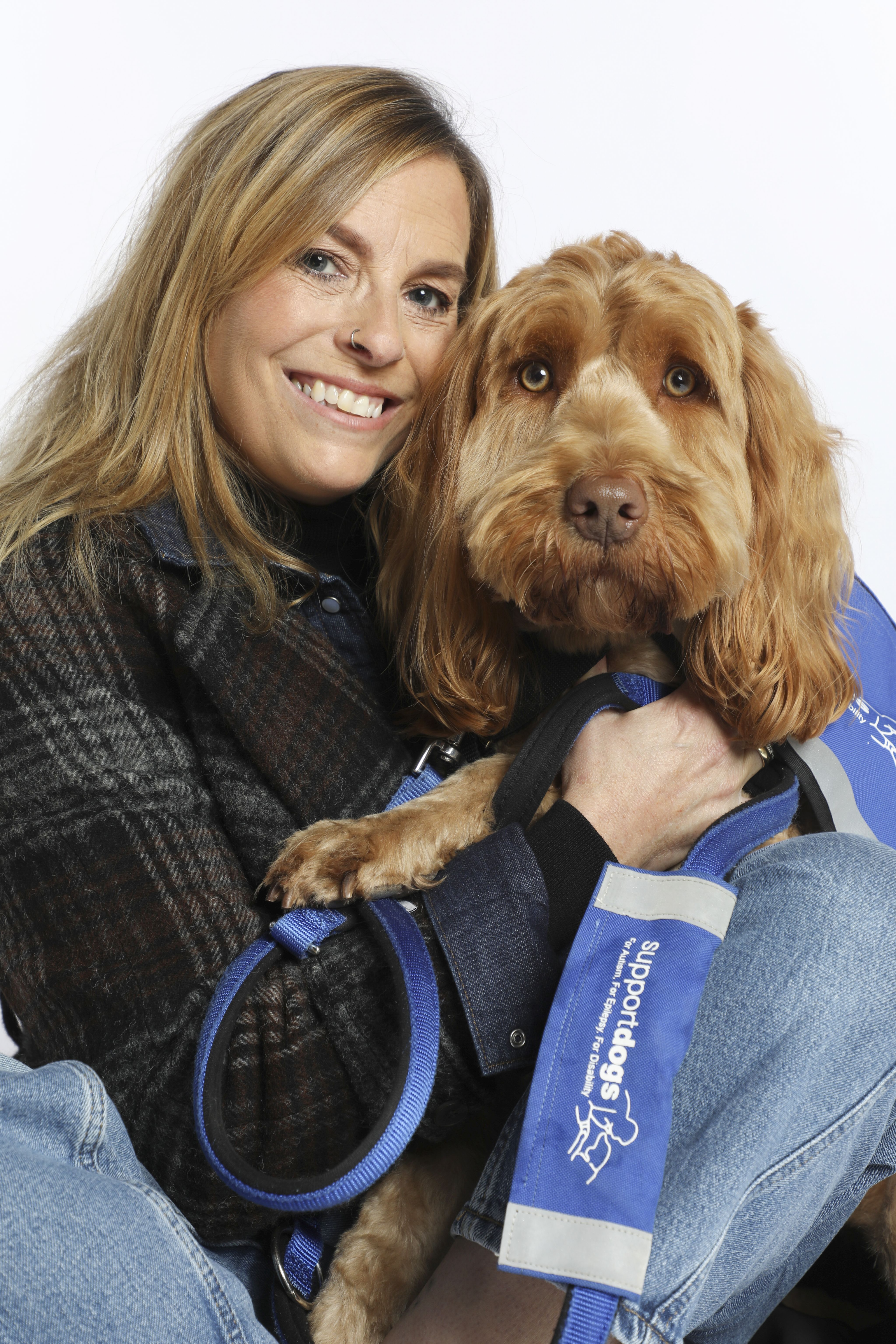



Heidi Robinson’s world completely changed 15 years ago when she suffered brain complications and non-epileptic seizures.
7 years later, Heidi, 52, from Derbyshire, was also diagnosed with Myalgic Encephalomyelitis (ME), commonly known as chronic fatigue syndrome.
She later learned she was living with fibromyalgia and long COVID symptoms, confining her to her home and marking the beginning of her mental health decline.
As her physical health deteriorated, she was unable to do basic tasks on her own and became depressed, anxious and isolated.
Recalling the difficult time, Heidi says: “I wasn't going out. I wasn't leaving the house or going to any family gatherings, and the COVID lockdown made my mental health 10 times worse.
“I was embarrassed at people looking at me and thinking, what's wrong with her? So I just completely stopped going anywhere.”
Many with physical disabilities experience significant psychological challenges as a result of the restrictions placed on their daily lives.
According to the Mental Health Foundation, more than 15 million people live with one or more long-term conditions, and more than 4 million of these also have mental health problems.
Dr Ellie Stankovska, a Counselling Psychologist specialising in chronic illness and disability, particularly brain injury, M.E., and long COVID, says: “Living with a long-term illness can be emotionally exhausting. The most common mental-health challenges I see are isolation, depression, loss of independence, changes to identity, and anxiety about being a burden.”
She explains that it can have a profound impact on an individual's social life.
“These difficulties are understandable responses to the realities of managing a body that often has to work significantly harder to complete everyday tasks, fatigue, pain, and cognitive overload can make socialising or engaging in routine activities far more demanding, increasing the risk of loneliness,” she says. “Not because of personal weakness, but as a natural response to the relentless demands placed on both body and mind.”
That’s why the 360Wire-backed campaign, Paws for a Cause, has chosen to aid Support Dogs, a charity that provides life-changing assistance dogs to adults with physical disabilities and seizures.

For Heidi, it wasn’t until the family pet Luna gave birth to Rolo, a labradoodle with big brown eyes and a playful personality, that things changed.
She came across Support Dogs’ disability assistance programme and opted to enter him into training.
After lots of form-filling, Heidi anxiously sent Rolo off for four weeks to learn the skills needed to help her.
A year later, the pair graduated, transforming him from a pet into her personal hero.
Speaking fondly, Heidi says: “He gets me up in the morning and out of the house. It's had such a positive effect on my mental health. If I'm thinking and I get sad or I get a bit down, I look at Rolo, and he does something to make me laugh.
“I know I've got him to look after and he looks after me as well, he gives me a real purpose, and those negative thoughts have just been nonexistent for the past year now, it’s amazing.”
The mental uplift Heidi experienced comes from the unique bond she shares with Rolo.
Assistance animals can be essential to overcoming emotional obstacles and getting back out in the world.
Dr Renata Roma, a clinician and researcher who specialises in human-animal interactions, offers some insight into why support dogs can be so effective.
She says: “Several things happen in the body when we interact with a companion animal. One of the most consistent findings is a decrease in cortisol, which is the hormone related to stress, and a regulation of blood pressure. We've also seen higher activation in prefrontal and frontal brain areas during interactions with dogs, especially during play.”
She explains it taps into the framework of co-regulation: “The emotional states of animals can influence the emotional states of humans and vice versa,” she says. “When people feel more relaxed, their confidence and sense of autonomy increase, which contributes to overall psychological well-being.”
For Dr Roma, support dogs are essential to mitigating emotional obstacles and facilitating reintegration into society.
”Support dogs are necessary because they help in ways that are both visible and invisible. We tend to hierarchize relationships and sometimes forget how powerful the relationship with an animal can be. For people with physical disabilities, they bring emotional comfort and companionship that empowers them.”




Dr Ellie Stankovska
Dr Ellie Stankovska


Dr Renata Roma
Dr Renata Roma
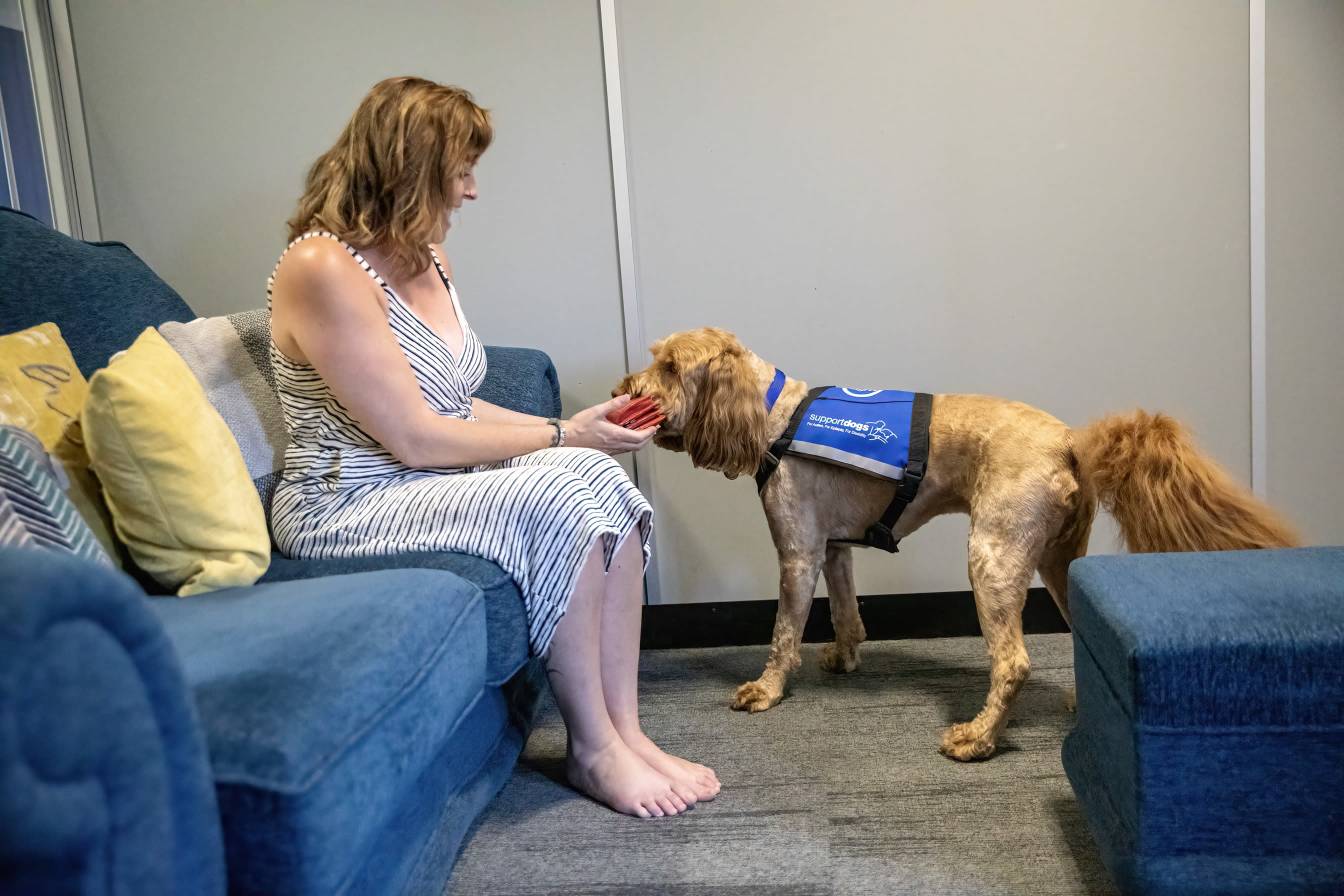
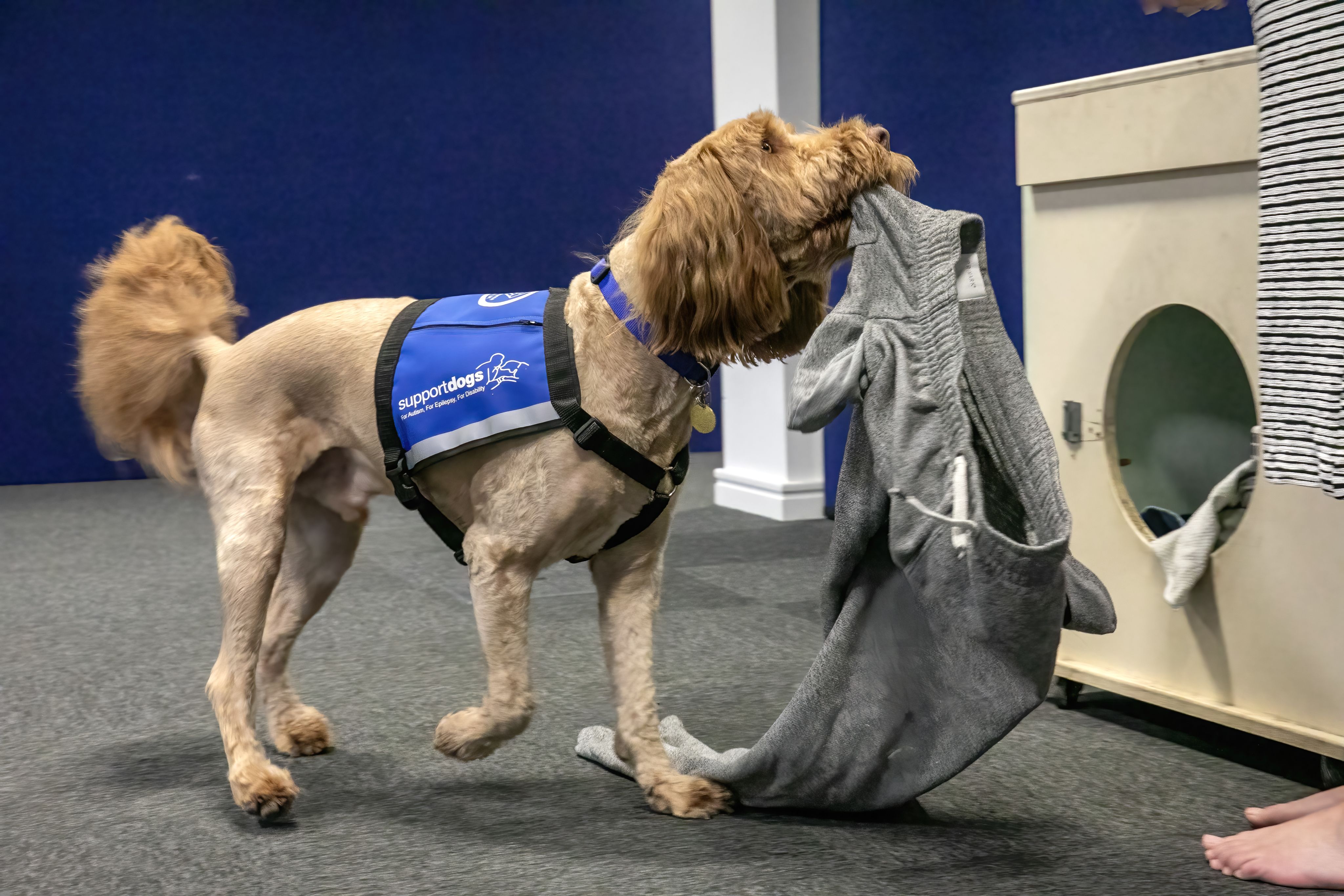
Rolo can help Heidi with loading the washing machine, stripping the bed, fetching the post and even bringing her blankets and socks when it’s cold.
Her furry companion also accompanies her to doctors' appointments, the shops and to therapy, adding extra comfort.
Beyond practical help, Rolo has brought joy, independence, and connection into Heidi’s life.
Together, they enjoy long walks in the woods and trips to the beach.
Since getting Rolo trained, Heidi has achieved things she never thought possible because of periods of self-isolation, from modelling on a Vogue Italia cover to featuring in Women’s Weekly and Take a Break magazines.
Heidi says: “To be able to tell my story, I did cry, and to see Rolo and me in the magazine, it was incredible. If it helped even one person to face their mental health head on, then it was worth it.”
Through their work, Support Dogs have empowered Heidi and many others to live life independently and with confidence.
The charity is currently facing a waiting list crisis, with demand for the assistance animals far exceeding resources.
Paws for a Cause aims to raise funds and increase volunteers for the charity, ensuring those in need are provided the support they deserve.
The campaign strives to raise £1,000 to enable 10 autistic children to meet their future support dogs, increase support dog Peggy’s sponsorships from 6 to 20 and secure 10 new registrations of puppy socialisers.
When reflecting on the work Support Dogs have done, Heidi says: “I can't thank them enough, they've given me my independence back, have taken Rolo, who was just a pet, and trained him to be the most important man I know.
"They have given me a life that I wouldn't have had if it weren't for their work and support.”


 Built with Shorthand