
Billy Bragg: Protest Music’s Bridge Between Generations
From Red Wedge to digital era activism, Billy Bragg’s four-decade career shows how protest music survives by evolving and why people power still beats algorithms.

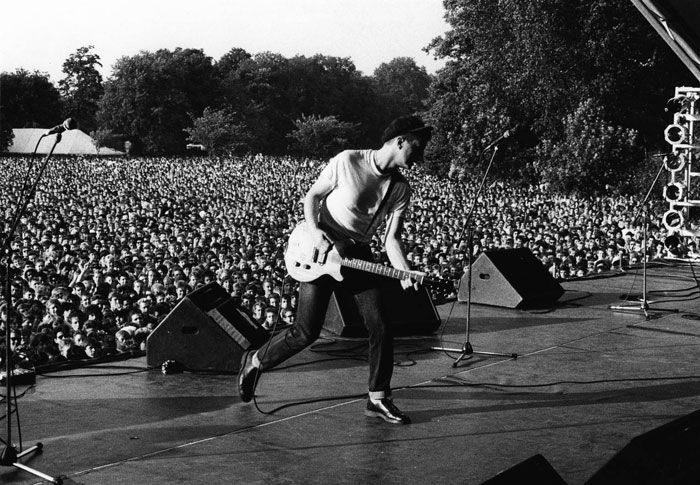
In 1978, a march moved through London like a gathering storm, swelling as more people joined. Feet pattered on the ground like rain, keeping time with chanting voices that thundered against the far-right National Front. Shoulder to shoulder, those committed to change embarked on a pilgrimage to Victoria Park. The free gig was organised by anti-racism group Rock Against Racism to mobilise young people against the far right. The Clash burst onto stage as electric waves of distortion called upon thousands to rise against discrimination.
Amongst the roar, a young Billy Bragg stood for the first time at a political protest. Billy recalled, “Seeing 100,000 kids just like me was a catalytical moment in my political awakening.” Later Tom Robinson's 'Sing If You're Glad To Be Gay,' echoed through the park as men around Billy began kissing. Frozen in his tracks, it was like a foreign language; he had never seen openly gay men before. Billy didn’t know it yet, but that day marked his christening into a life of protest music. From that moment he decided he wasn’t going to laugh at the homophobic jokes at work on Monday.


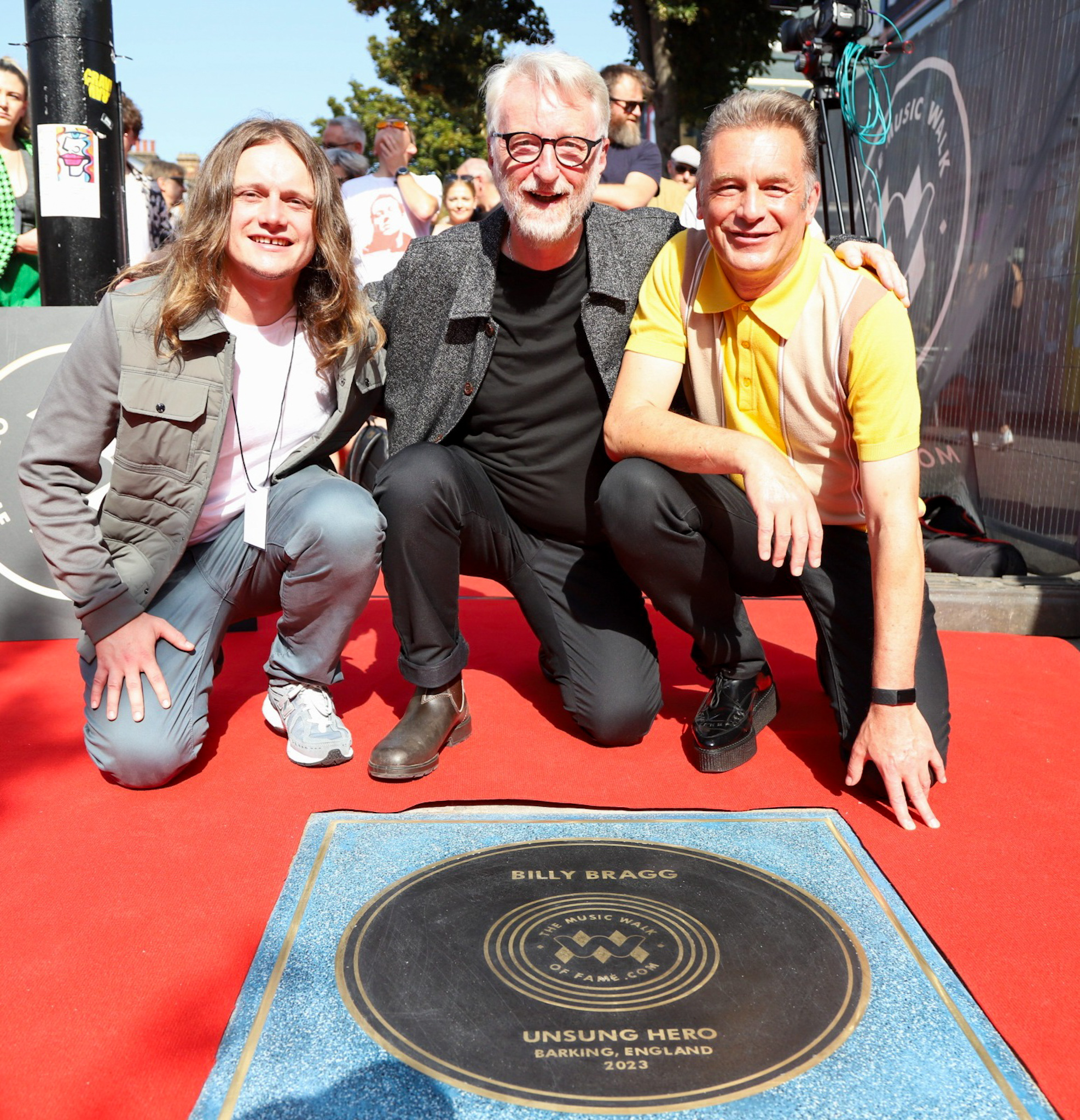
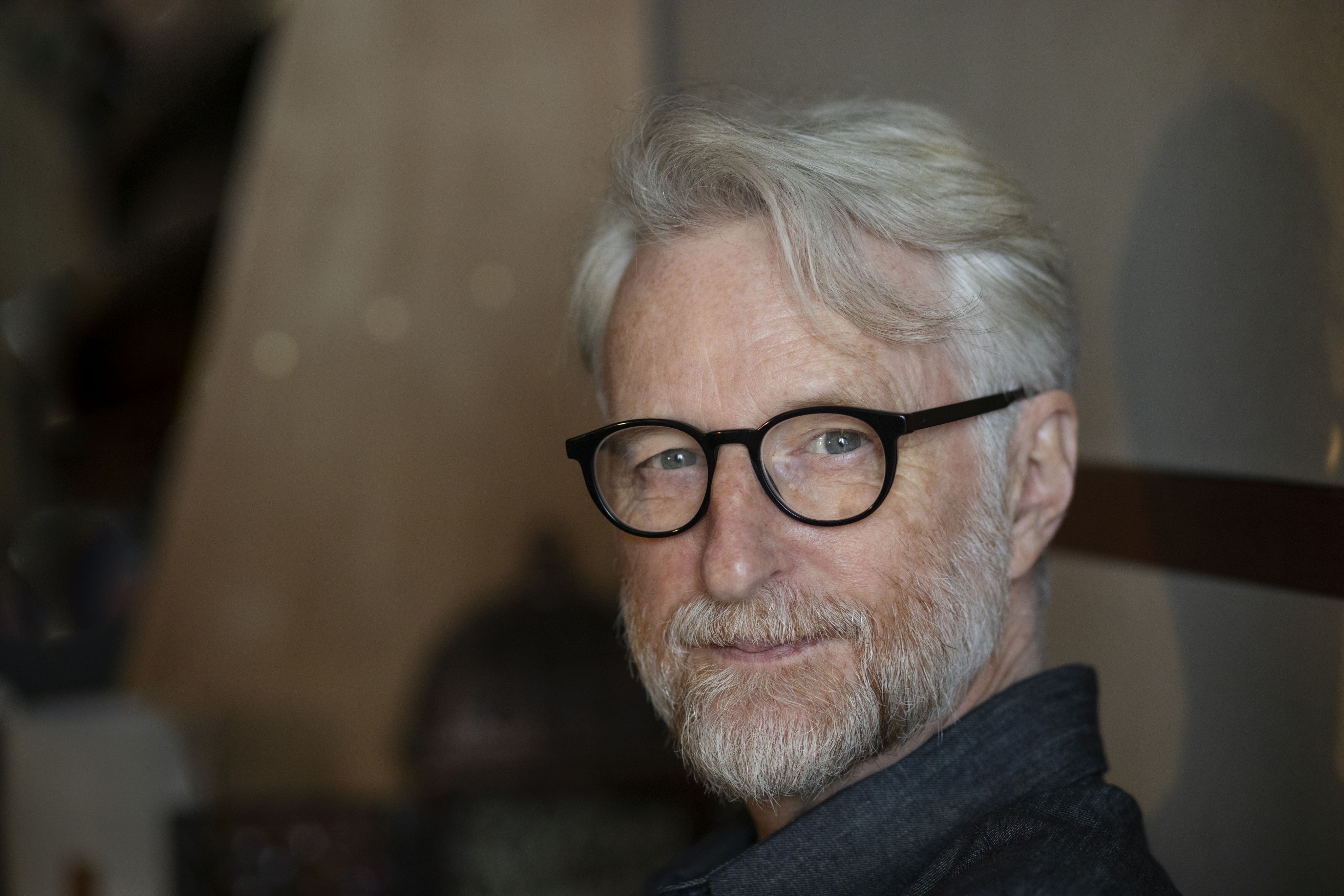
Billy Bragg has dedicated forty years of his life to protest music, earning a BBC Folk Lifetime Achievement Award, a Grammy nomination and a place in the Camden Hall of Fame. He became one of Britain’s defining political musicians with ‘There Is Power in a Union’ touring extensively for most of his career. Forging protest music became his lifelong tool, “I was taking the negative things that had happened to me and hammering them on the anvil of my conscience into a sword with which to cut my way out of this forest of frustration.”
Notably in the 1980s he teamed up with Jimmy Somerville and Paul Weller to front the political movement ‘Red Wedge’. A collective toured the country urging young voters to support the Labour Party against Thatcher in 1987. Billy explained “It was something that had never been done before, making a direct collaboration with a mainstream political party in an attempt to change the government.”
Billy wanted a voice that could make a difference and follow in the footsteps of the greats: Bob Dylan, Woody Guthrie and The Clash. He fused all three into his distinct style, a solo punk rocker. Culture historian Dr. Matthew Worley said “He's probably the most well-known of the people who sing protest songs of the late 20th and 21st century” and explained how crucial he has been linking into mainstream: “He's also been very important for maintaining the idea of protest song as a kind of legitimate part of the pop cultural cannon.”
“Music can't change the world despite what people want to tell you. But it can make you believe the world can be changed”
Billy Bragg

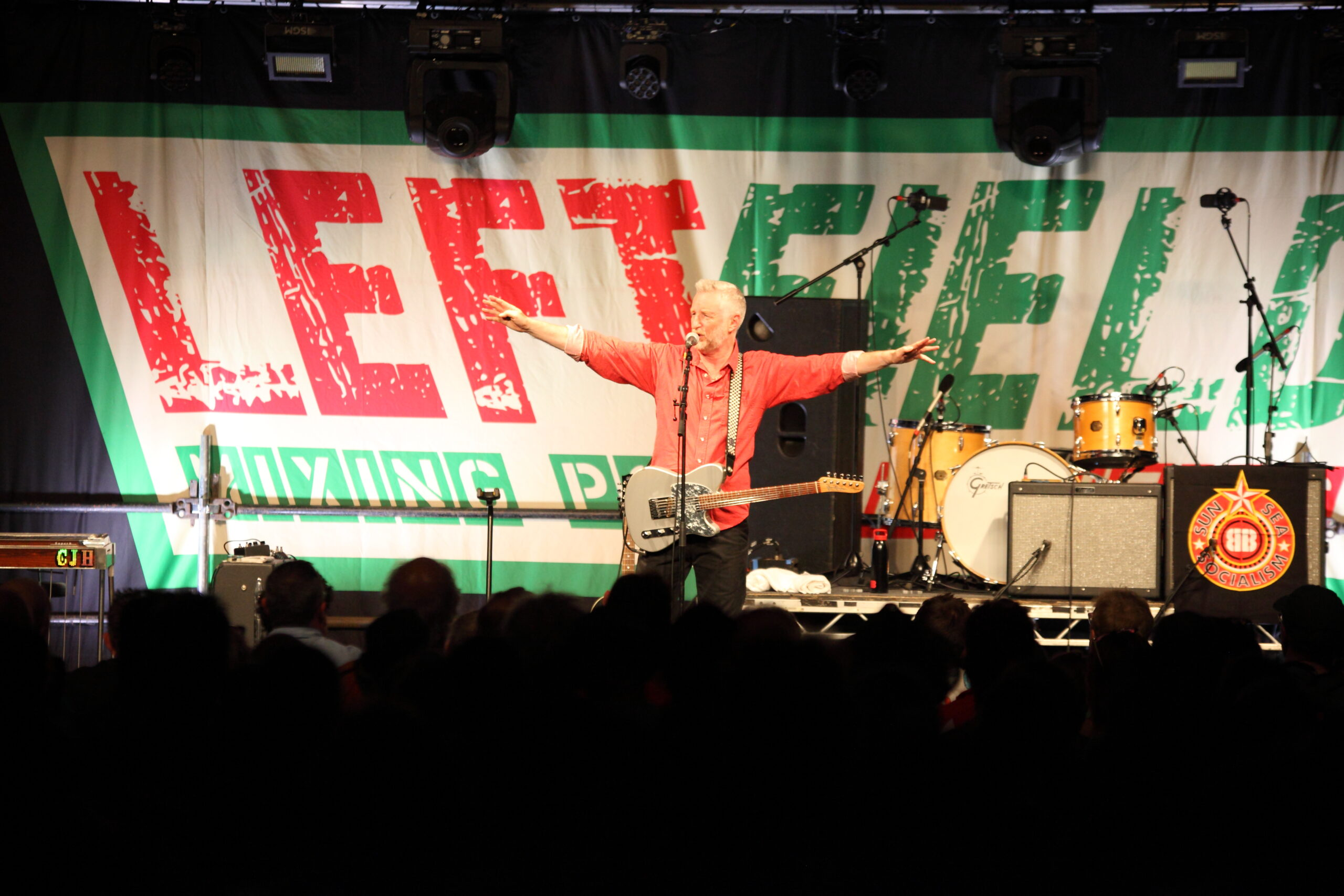

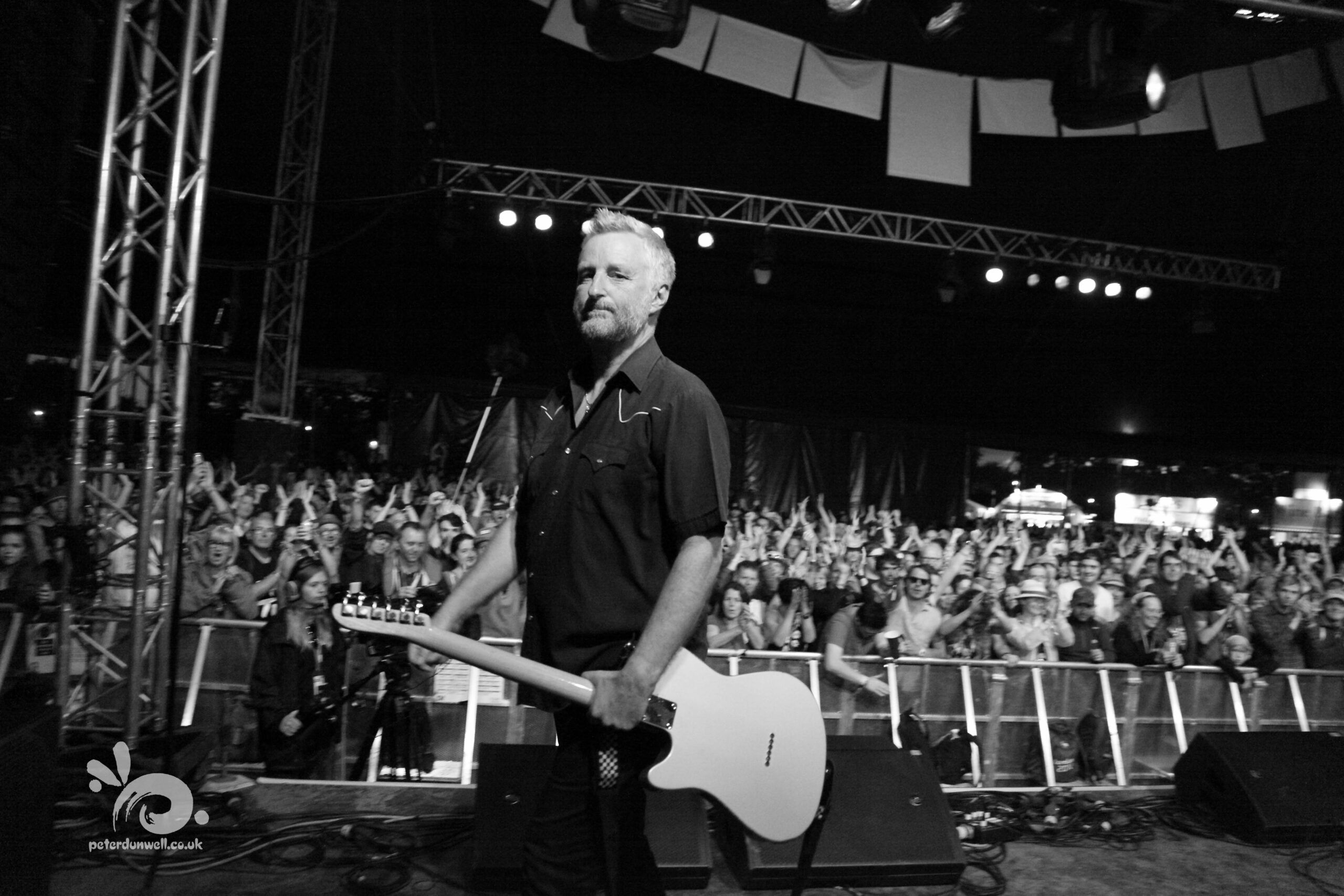
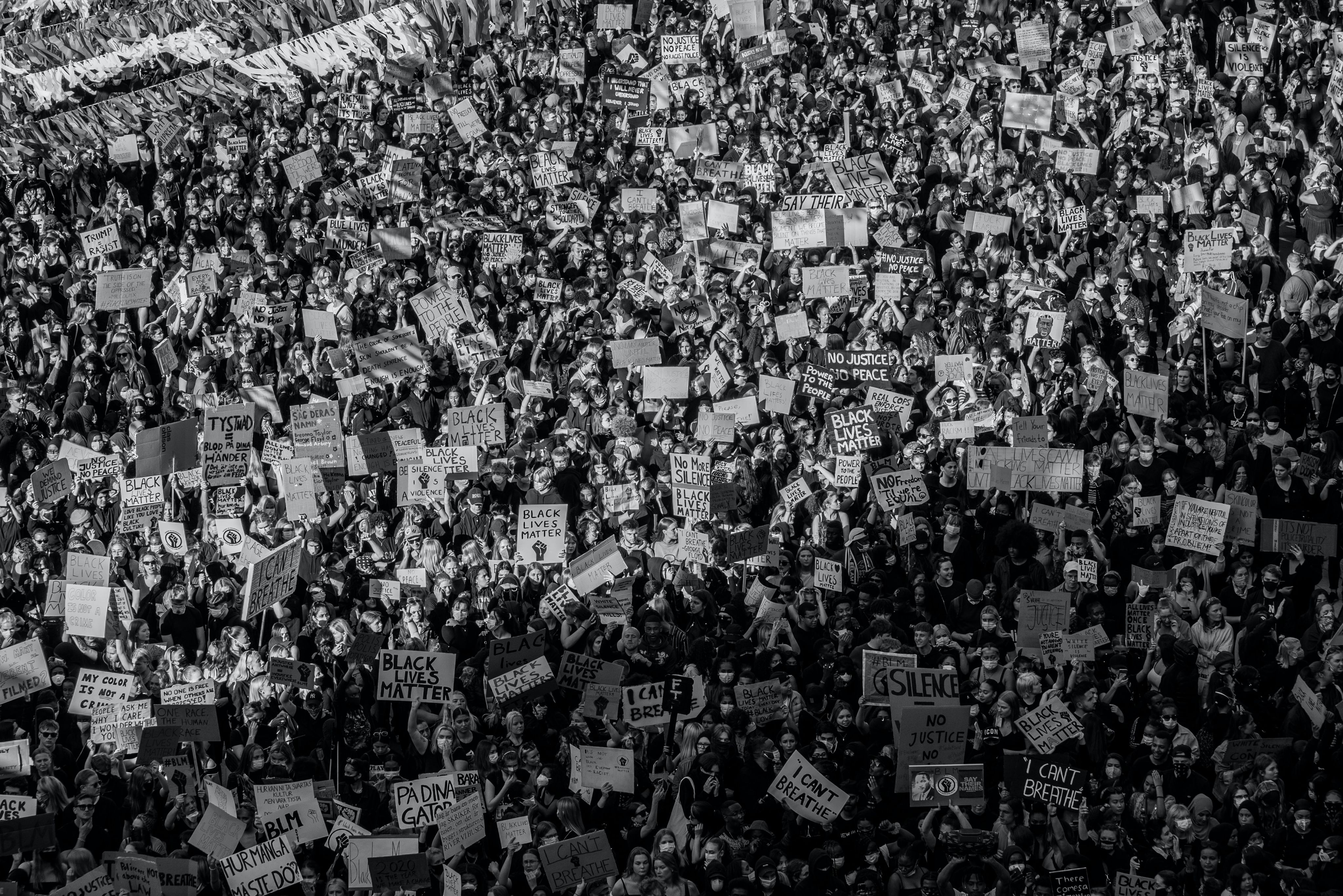
Billy embodies people power as a backbone within his music. During his experience at Victoria Park, he said it wasn't The Clash that changed his mindset, it was the people that were there on the day. “Music can't change the world despite what people want to tell you. But it can make you believe the world can be changed.” Dr. Worley agrees and said that “A single song doesn't bring down a government, but it's part of the dialogue and part of a discourse. Feeding conversation and shaping people's ideas and opinions”
From English folk, to the US civil rights movement, protest music has a vital role by combining politics, people and media to create impact. That lineage continues through recent political acts at Glastonbury this year, including Kneecap, an Irish rap group who challenged British state power, and punk-rap duo Bob Vylan, who targeted racism, class inequality and issues around Palestine. Their performances fuse protest and entertainment in physical spaces uniting communities. Dr. Worley said “Protest music is an integral part of our political culture. As long as there have been democratic societies, people have used songs to vent opposition, give voice to dissent and share ideas.”
Despite the heights of touring with Red Wedge and promoting progress for decades through music, Billy believes that “No live music would ever have made Donald Trump President. That is the reality. That's where the fight is…if it was all still about songs, I'd be banging them out once a week.”

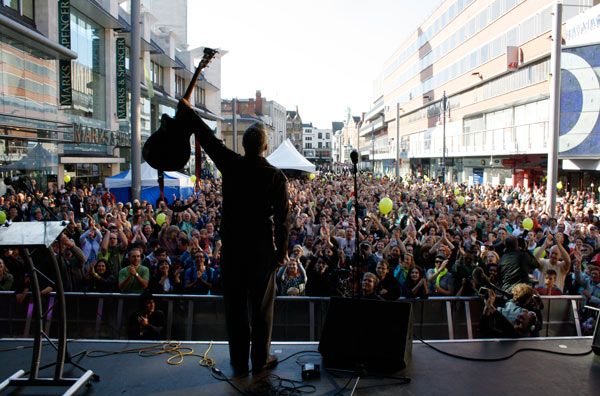
Since Billy first plugged in his guitar and everyone read the same four music papers, culture has become digitalised, with protest music adapting to a world shaped by handheld screens. Dr Worley said “The society we live in at the moment is increasingly virtual and fragmented, meaning there's a sense that every protest is a kind of proverbial piss in the ocean.” Today, anyone can make content from a phone and reach an audience as large as Billy once did live, but remotely, in a matter of minutes.
Billy has adapted by writing short articles on Facebook and Substack, and by filming videos for Instagram to spread his message. He continues touring and protesting up and down the country he claimed “If I was around now, maybe I’d be making incredible Tik Tok videos about politics”
Online boycotts and digital protests are happening regularly. From fans boycotting Stormzy’s McDonald’s meal after he deleted a pro-Palestine Instagram post, to Paul McCartney releasing an anti-AI track. We see how activism has shifted from stages to screens. Billy uses digital platforms to spread his message. “It's about running stuff up a flag pole and seeing who salutes it on the digital platforms for better or for worse.”

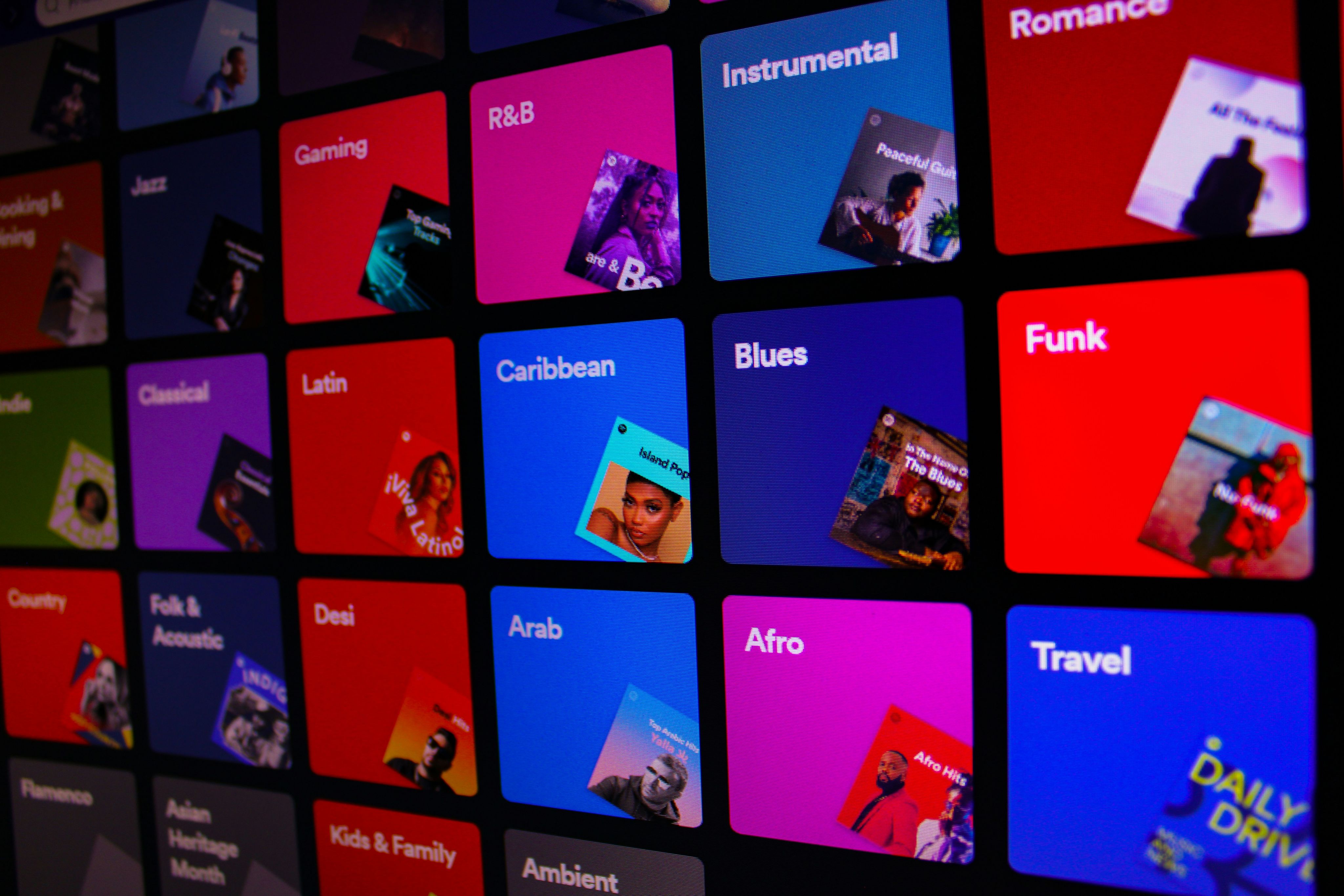
Musician Eleanor McGregor has recently joined the online boycott against Spotify CEO Daniel Ek, who is using profits to support AI military drones. She said, “I don’t want my art to be fed to AI or have any part in a system that’s turning something deeply human into statistics and profit.” By taking her music off Spotify, alongside other artists like King Gizzard & the Lizard Wizard, her actions are contributing to an online music protest movement. She states “I think the more effective form of protest available to me is actively supporting the artists around me and doing everything I can to be part of keeping DIY music alive.”
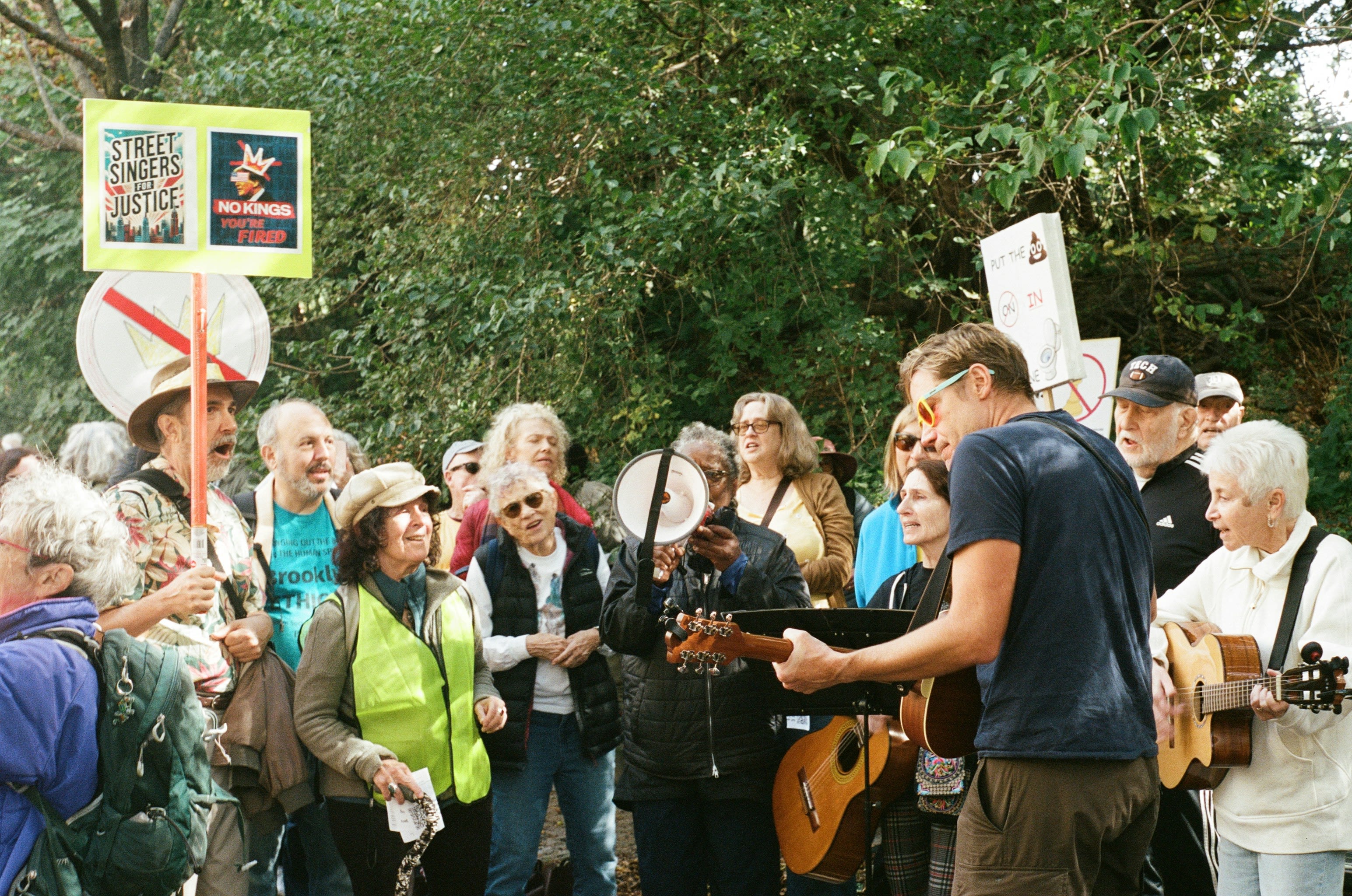
An organisation that has managed to continue live protest music is Young Musicians for Palestine. The Nottingham/Leeds organisation put on protest gigs to fundraise for Palestine, team member Hamza believes that real life protests are still just as vital as online movements; “Having physical space is really important as we really lack third spaces in our societies.” He said “Art has always had a very important role in every resistance movement… you have to create in the face of destruction.”


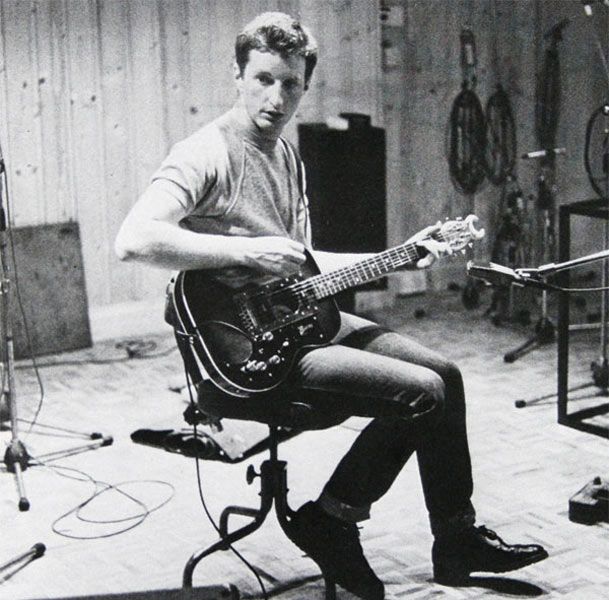
Billy is a firm believer in passing on the torch to the younger generation, he stated that his role now is simply to “communicate”, “That’s my bottom line.” Passing down his knowledge and experience that radical folk singers gave him in his 20s, despite being a punk rocker they would say "Yeah, you're part of this now, son.” When standing in solidarity with miners and their families, “Doesn't matter what songs you play, you're part of the tradition”
Billy is ensuring this flame stays alight, encouraging younger artists. He believes they are “Part of the tradition as much as me, Weller, The Clash, Woody and Dylan."
Billy stated that there will always be things to fight for quoting Joe Strummer "Every generation has to deal with the blues. Unfortunately, these things don’t go away.” This belief explains why Billy continues to protest, using his music as a force for change.
He has spoken of being moved when hearing Nkosi Sikelel' iAfrika, saying “I feel proud that I took part in the fight against apartheid” and “When I see gay men getting married, lesbians getting married, I feel proud I stood with gay pride” While he values these moments of progress, Billy insists the struggle continues “that fight doesn't go away.” Channelling Tony Benn’s words “You never absolutely win but you never absolutely lose either.”

Online platforms have made protest more accessible than ever, but they have not replaced the power of people together. Change still begins in grassroots venues, in physical spaces and within unity, with Billy planning to tour again across UK and Europe in 2026. The pluralistic society where the right to speak has been democratised, the work of protest remains, shared and ongoing. Billy said “It’s a very slow process. But I do believe that the arc of history does bend towards inclusion.”
 Built with Shorthand