
Beyond the Sidelines: Female Coaches as Role-models
During an exciting time for women’s football, Esme Critchley explains the powerful influence of female coaches on and off the pitch..
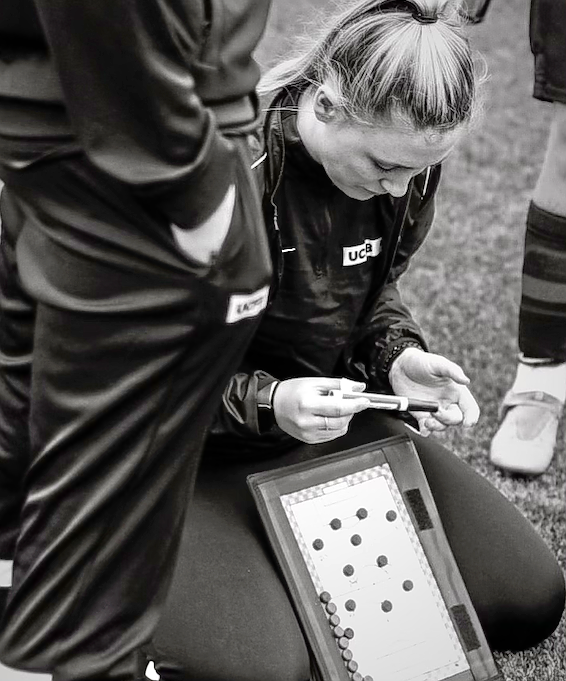

“Do you need me to take your girls for a warmup?” The opposition's coach yells from across the pitch; a smug grin playing on his lips. This summer, Esme Critchley was in the USA coaching in different States; she’s in her second season coaching the University Campus of Football Business (UCFB’s) Manchester Women’s team. She coaches at Manchester United’s Foundation and she’s here coaching at her local grassroots club. No, she replies, ambushing him with her answer.
Esme Critchley is well accustomed to the sidelines of a football pitch. At eight-years-old, she began playing: learning tactics and skills within the painted white lines, led by inspirational female coaches. Until the age of 14 she was trained by women and through the progression of her journey has experienced a mix of coaches, but always considered herself to be lucky when coached by a woman.
Her view is that female coaches are great role-models, especially to young women as they provide a more realistic outlook on future goals. Following in her coaches' footsteps, Critchley is training to achieve her coaching license, and join the increasing number of women to obtain their UEFA Pro License (the top qualification for a coach). “I followed the path of both of my female coaches as they both attended UCFB and studied similar degrees within the football industry as I am now,” she says. “My aim is to be this person for other young female players as they grow up.






Sarina Wiegman, a name that has become synonymous with the breakthrough of women’s football, has become a remarkable inspiration to others. She won the 2021/22 UEFA Women’s Coach of the Year award, altering the landscape of female coaching alongside Sonia Bompastor and Martina Voss-Tecklenburg, making it the first all-female shortlist in the awards history. Wiegman secured the title after leading the Lionesses to an incredible victory at the Euro’s and playing a crucial role in the shift of women’s football.
After the confetti was swept away and the echo of English chants had faded, the Euros became an incredible memory and a platform for Sarina Wiegman to serve as a role-model, inspiring generations and releasing her winning strategies in her book ‘What it takes: my playbook on life and leadership.’
The Lionesses winning the Euros was a breakthrough for women’s football in 2022 with the UEFA reporting that 365 million viewers watched the game, more than double that of the 2017 Women’s Euros. Female players are earning bigger salaries and transfer fees, playing in sold out stadiums while their games are being televised. However, women’s involvement in coaching is still playing catch-up with only about a third of managers in the Women’s Super League being female, and the lower the league, the fewer there are.
Esme Critchley has stepped into the world of football coaching, but as she steps into her classrooms, her presence becomes obvious, as the only female amongst a team of male peers and leaders. The teaching and conversations are often centered around the men, leading Critchley to be the solitary voice of the women’s game. This is not only confined to the classrooms but extends onto the pitches, where she paces along the sidelines as the only woman; her encouragement being her role-models who walked a similar path. She says that “The importance of having a female coaching role model is to provide yourself with the picture of someone who has done the journey that feels impossible.”
Role-models are particularly important for women in football, where until recently, the football landscape had been dominated by men. ‘Sex Roles’: a journal published by Springer, studied how ‘She needs to see it to be it: The importance of same-gender role-models’ and revealed that “female college students who read about a highly successful woman in their intended occupation viewed themselves more positively than those who read about a successful male; male college students, however, felt equally positively about themselves after reading about a successful role model of either gender.”
Women’s Premier League, Burnley player: Lara Miller shared how “From experience, it positively impacts us as players to have females who understand our perspective and journey and can relate and form important bonds which helps us work together as a team more successfully.”
When coaching the female groups with the Manchester United Foundation, Esme Critchley found that “girls change their whole personality and persona when a male coach comes to help within the session, even though they are in the same role as I am as a coach.”
Nick Cox, Manchester United’s head of Academy discussed how there’s a generation of adults who have had to break down barriers, leading to very few female coaches and a game of catch-up. He said, “We have to think about ways to make sure, moving forward, that there are greater opportunities and that we have a greater pool of coaches to select from.”

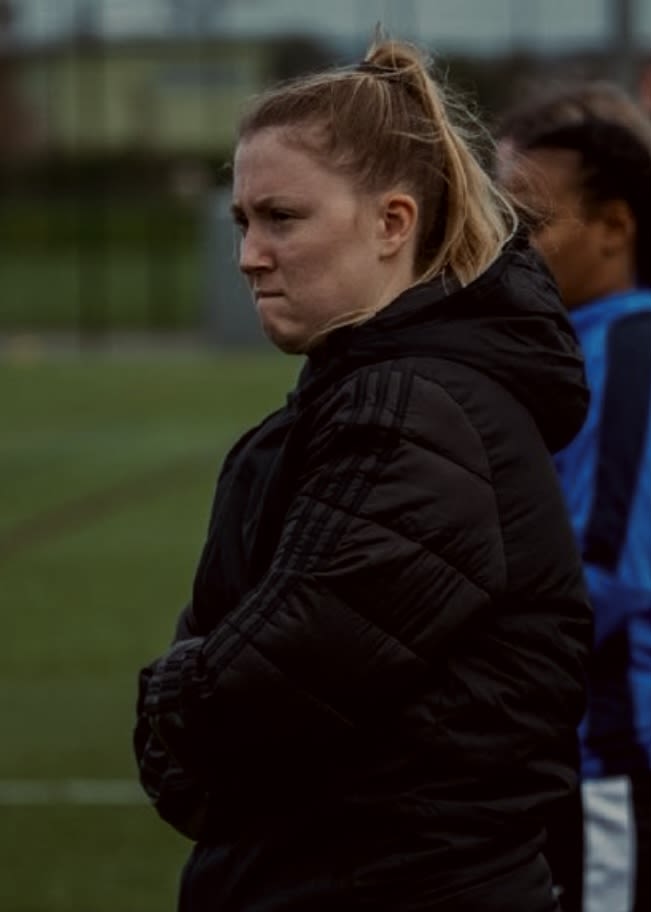
Photo by UCFB of Esme Critchley
Photo by UCFB of Esme Critchley

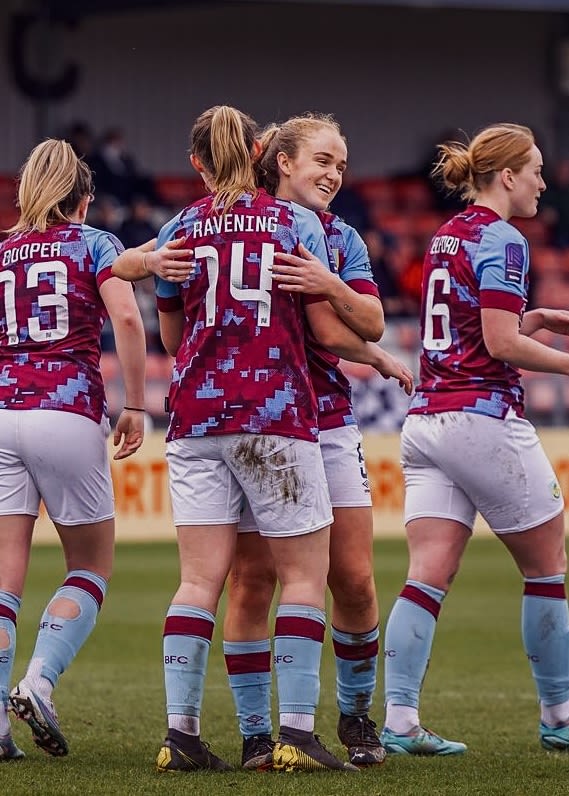
Photo by Burnley FC Women of Lara Miller
Photo by Burnley FC Women of Lara Miller


Photo by Paul Cooper on The Coaches Voice
Photo by Paul Cooper on The Coaches Voice
As a young woman still working their way up in the coaching industry, Esme Critchley shared how it can seem impossible to reach the higher levels of some coaches.
Research by Dr Beth Clarkson, in the ‘Women in Sport and Physical Activity Journal’ found that women in coaching face more discrimination than men and are denied opportunities to advance in their careers. She also witnessed female coaches being regarded as ‘tokens’ of diversity.
Diversity can be interpreted in two ways according to Nick Cox. The first is a superficial attempt to satisfy a requirement and the other is that it is beneficial. He says, “It’s about high performance, so when we build our teams of staff we have to think about a diverse group of people from the point of view as we know that that will make us better, it will give us a competitive advantage; it will help us be better than our opposition.”


Photo by Abigail Keenan on Unsplash
Photo by Abigail Keenan on Unsplash

Photo by Nathan Rogers on Unsplash
Photo by Nathan Rogers on Unsplash
One quality of a coach that can give this competitive advantage is the ability to build great connections. Nick Cox says “I think young people often connect with someone they can relate to, a role-model – someone from a similar background or who has walked a similar journey to them. So naturally, if you’ve got female players, I think it’s important that they have female coaches to work with, but that doesn’t mean to say that a male can’t fulfil the same role as a female.”
There are incredible male coaches such as Jonatan Giraldez: the Women’s Barcelona FC coach who has been shortlisted for ‘The best FIFA Women’s Coach of the year,’ award this year. However, with females having very little exposure to same-gender athletic mentors - who may be uniquely suited to role-modelling what success for women looks like in a male-dominated world - it’s important to have female coaches.

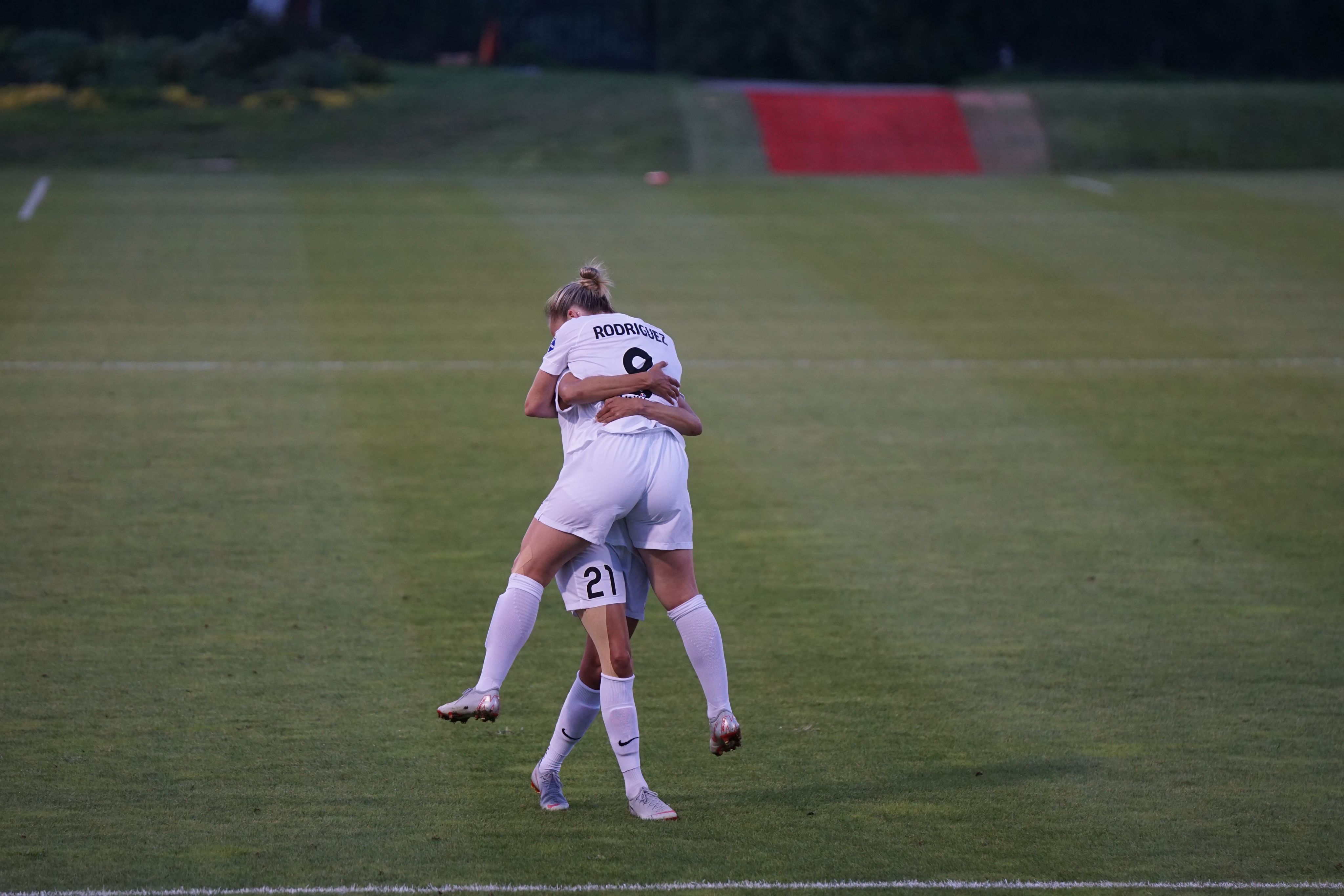
Following the stereotypes and bias about women in footballing careers, which led to fewer women applying for roles in higher positions, large footballing organizations have devised plans to promote more women in football.
The Premier League has a coach inclusion and diversity scheme which gives clubs funding to appoint coaches from minorities which includes females. Many clubs have also signed up for the diversity code, which means that when building their staff, they should consider how inclusive they are, regarding their hiring, and advertising of jobs. “But actually, all of those initiatives are about fixing a problem that’s already been created. The real solution is to try and eradicate the problem,” says Nick Cox.
Looking back a generation, there were young girls and women who couldn’t find girls teams to play for and forced to play with the boys or told they couldn’t play at all. Since then, greater opportunities have been made for women with ‘FIFA’s Women’s Football: Member Associations survey Report 2023’ showing that the number of women and young girls playing organised football has increased by 24 per cent to 16.6 million.


The same report revealed how 48,202 female football coaches exist within the global stadium – five per cent of the total 901,000. Whilst this percentage appears discouraging, making dreams of female coaches feel impossible, Esme Critchley remains inspired and motivated due to her role-models'. She says, “It has helped me massively having a female mentor and having a female to look up to within the industry, and it gives a more realistic outlook on your future goals.” She now hopes to be that role model to others beyond the sidelines.

 Built with Shorthand