
Lost for words: how modern foreign languages is becoming "the preserve of the privately educated"
In 1997, one in two British children left school having studied a foreign language to GCSE level. Today, that figure has collapsed to fewer than one in three, and many fear it is about to fall further still.
This summer, for the first time, thousands of students across England are sitting a reformed GCSE in French, Spanish, and German. Two years in the making, the new qualification was designed to arrest a decades-long decline in language uptake.
The idea was conceived to make the exams fairer, more accessible, and more likely to keep students in the room. Though many of their teachers fear it will make matters worse, not better.
The exams arrive at a moment of acute crisis. In March this year, the University of Leicester became the latest in a lengthening line of institutions to close its modern languages department to new students. The university has rescinded UCAS offers to nearly 300 prospective students, mid-admission cycle, and with 17 academic jobs on the line.
The University of Leicester, the University of Essex, Heriot-Watt University, and Nottingham - a Russell Group institution - have all, within the past year, either closed or suspended their Modern Foreign Languages (MFL) programmes.
The University and College Union (UCU) has warned that the East Midlands is on the brink of becoming a cold spot for modern in languages in higher education entirely.
The question is no longer whether modern languages are in decline. The question is whether anything can prevent it, and whether, in the absence of an answer, languages will become what many in the profession already fear they are becoming: the preserve of the privately educated.
On the fifth of November 2025, Education Secretary Bridget Phillipson stood before the House of Commons and announced the phase-out of the English Baccalaureate (EBacc), the performance measure that had, for all its flaws, kept MFL on the curriculum for a generation of state school pupils.
Schools would no longer be held accountable for whether their students took a language at GCSE. For many in the MFL community, the announcement felt less like a reform and more like a verdict.
Video created by myself. All footage accessed using Parliament Live UK.

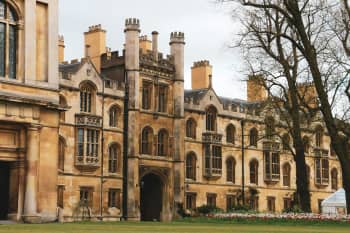
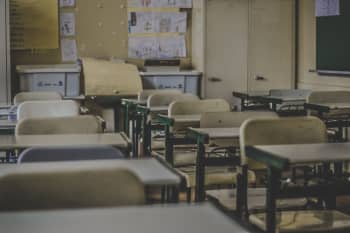
The School Picture
This crisis did not begin in November 2025. The seeds were planted long before the EBacc existed, and even before the EBacc's much-debated boost in 2013 could not reverse a deeper cultural indifference towards languages in England.
Maud Waret, a curriculum expert, ALL board member and MFL teacher in inner-city London, draws a stark contrast with France, where two languages are compulsory throughout secondary school.
"In France", she says, "working-class kids and parents value languages for work, for a career. Whereas in working-class backgrounds in the UK, they don't see the point. So it makes languages an elitist thing in the UK."
The hierarchy runs deeper still. Waret observes that even which languages are valued reveals a class architecture.
"We only value European, middle-class languages - French, Spanish, Russian. But if you speak Yoruba, or if you speak Twi, or if you speak Swahili, that's not valuable."
"It's not so much the linguistic skills that people value. It's the belonging to a certain Western cultural elite."
Charlotte Evans, who has taught French and Spanish in an inner-city Birmingham academy for seven years, is candid about the EBacc's limited impact on the ground.
"I don't think the EBacc has any impact on pupils taking languages", she says.
"The only people who talk about it at school are the languages teachers, and we talk about it for six weeks in year nine. Then we never mention it again."
Her concern, instead, is structural: the perception among schools that a languages GCSE, harder to score well in than most humanities, is a threat to league table performance.
"If a school is really obsessed with results," Evans says, "then yes, they could quietly discourage languages."
Veerle Bellers, a Flemish native who has taught German and French in English secondary schools for thirty-one years, has watched this erosion up close. She is unsparing:
"I think languages have become incredibly elitist," she says, "and they're wondering why so many departments don't get enough students anymore. You're culling language hours in schools and yet you still don't come out with top grades. I don't know how those two things relate to each other."
"The leap from GCSE to A Level was always quite big, but it is now a monstrous chasm."
The data bears her out. GCSE French entries have nearly halved since 2008, dropping from 184,815 to 125,980 in 2025. German has fared even worse, declining by over two thirds. Spanish alone has grown, now overtaking French for the first time.
The language of Cervantes is not flourishing because Britain has fallen in love with languages, however. It is flourishing because it is perceived as easier.
"A monstrous chasm"
That reformed GCSE was designed in part to arrest the decline.
Justine Swainson was involved in developing it and serves as principal examiner for the GCSE French listening paper with Pearson. She does not mince her words:
"The leap from GCSE to A Level was always quite big, but now it is a monstrous chasm."
Swainson identifies a structural paradox at the heart of the reform. Simplifying the qualification to maintain uptake - fewer words, questions in English, reduced inference demands - may keep more students in the room for GCSE, but at the cost of preparing the most able for what comes next.
"Some of the moves have been mainly to help the foundation students," she concedes, "but this raises questions about whether we are really still providing the challenge for those that are most able."
Higher-tier students, she predicts, will emerge with strong grades built on foundations too narrow to support A Level study.
The funnel is narrowing at every stage.


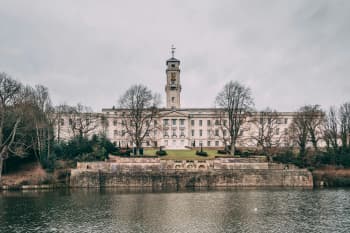
The university crisis...
The consequences of school-level decline are not limited to schools. As fewer pupils take languages to A Level, universities face shrinking applicant pools, and respond by closing departments.
What is disappearing are not only degree courses, but the entire pipeline of future language teachers, researchers, and professionals.
Alisa Jordan Fleischer-Walker studied Applied Languages at the University of Portsmouth - a course which has since been discontinued.
She now works as a Global Marketing Campaign Manager in Germany, using her degree daily.
Her view on what languages represent has shifted since leaving Britain:
"Humanities, in my opinion, are always undervalued, underfunded. When I moved to Germany and told people what I'd studied, they just shrugged. Speaking more than one language wasn't impressive, it was just normal."
David Averre studied French and Russian at the University of Nottingham, in a department now to be suspended. He went on to become Chief Foreign Reporter at the MailOnline, a career his Russian made possible when Vladimir Putin's invasion of Ukraine placed him as the only Russian speaker on his desk. He is unequivocal about what languages gave him:
"Those experiences completely unlocked a new idea of what the world was like [...] learning these languages was basically a bridge to a world that you otherwise would never get to experience."
Both Averre and Fleischer-Walker speak of the urgent need for universities to demonstrate the vocational reach of languages degree - not to reduce it to employment, but to make its breadth visible.
"There are just so many options," Averre says. "You don't just have to go into translation or interpretation. There are other things out there."
What comes next?...
Phillipson's curriculum review reiterates the importance of languages from primary level.
There is no budget currently to hire primary language teachers. The cognitive dissonance, as Waret puts it, is the policy in miniature:
"Government papers say primary language teaching is really important. And then in my school, we're phasing out French, just because it's too hard, allegedly."
Without structural intervention comprising of compulsory languages, restored curriculum hours, and meaningful primary continuity, the reforms risk accelerating the very crisis they claim to address.
As Swainson concludes, with the quiet authority of someone who has spent decades inside the system:
"I think there is an argument that language education needs to evolve or die."
The question is whether those with the power to change it are listening, or whether, as Waret suspects, the endgame is simpler than it appears:
"Languages will be either for the informed, or for those who can afford them. The state will provide a very basic level of education, and everything else will be privatised."
A death blow to languages... or the beginning of a long, quiet erasure?
 Built with Shorthand