The day the music died


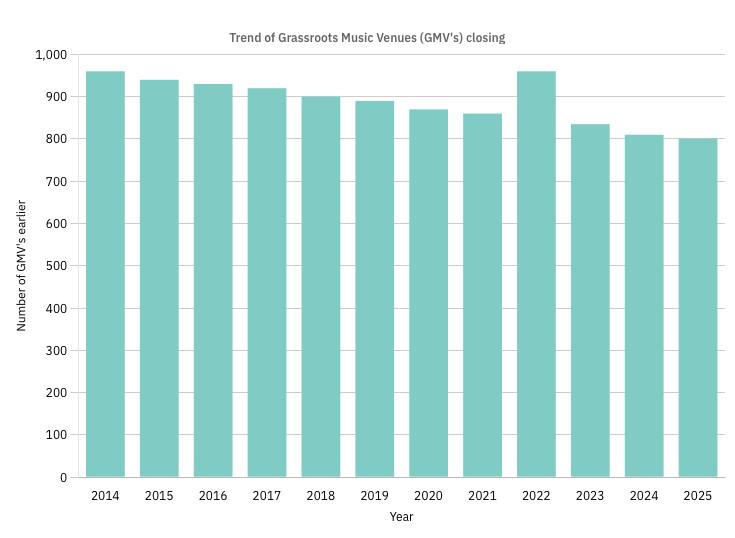
In 2024, 16% of grassroot music spaces shut in the UK. Kate Nash labelled it: "a fucking disgrace." Despite an overall increase in ticket demand, it seems the glory days are over. What began as a small trickle of closures has developed into a national crisis of darkened rooms and padlocked doors. With music being so deep rooted in our identity as a country, what will happen when the backbone of the industry disappears? This is the story of how we got to this moment in time, and what it will sound like when the music stops not just in one place, but everywhere.
The mass closure of grassroots music venues doesn't discriminate against any type of venue. Sheffield, in South Yorkshire, has been especially wounded in the post-covid era, as '40% of 'clubs and other night-time venues' (BBC) have shut since 2020', making the region the hardest hit area in the country.
Venue Yellow Arch Studios are struggling to make any profit whilst hosting their gigs. Venue operator Russ Frisbee says: "Every overhead has gone through the roof, we never make any profit off any gigs we do now."
Frisbee also thinks Sheffield as a city doesn't make the most of the talents it has already produced. He said: "We should be screaming that Pulp are from this city. A sticker on a window on Division Street simply isn't good enough. There should be a bloody monumental shrine or something."
The site was where Arctic Monkeys recorded their debut album, Whatever People Say I Am, That's What I'm Not, rated by us as the 19th best album of all time. Yellow Arch Studios themselves say they are one of the only buildings in Europe where people can write, record, perform and film all under the same roof.
The business model of Yellow Arch Studios is a good example of how grassroot venues have had to diversify in the post covid era. The venue, set in an old stable yard, now serves food on a day to day basis, as well as catering for weddings and other functions.
Frisbee says: "We love hosting gigs on Saturday nights, but if we're making double the profit from a private function, where's the pull factor for us?"
Without venues such as Yellow Arches, the next generation of music lovers would suffer more than anyone else. The Music Venue Trust (MVT) rightly warned: "We are losing the next generation of British talent because we can’t be bothered to get it right."
Liam Walton, a music presenter and content creator, used the venue Corporation in Sheffield as an example of this. He said: "Corp have noticed what the new generation want to see and have subsequently started to make changes as a result.
"It was a bit of a shithole before covid, the experience of going there was horrible. Since then, they've adapted by making it a nicer place to be, and survived."
The 20's - a dark decade


Credit - NHS England
Credit - NHS England


Photo by Taras Khimchak on Unsplash
Photo by Taras Khimchak on Unsplash
Why are venues closing?
We all know the devastating effect that the pandemic had on the grassroots music industry - it cannot be understated.
But in the years since then, the statistics are shocking. According to MVT, there has been net loss of more than 100 of grassroot venues since 2021.
Walton thinks it could be down to the lower amounts of alcohol that younger people are drinking. He said:
"From first-hand experience, it's those bar sales that keep these venues open.
"If venues aren't having people attend, with the people who do decide to show up not spending their money drinking, it's a double loss situation."
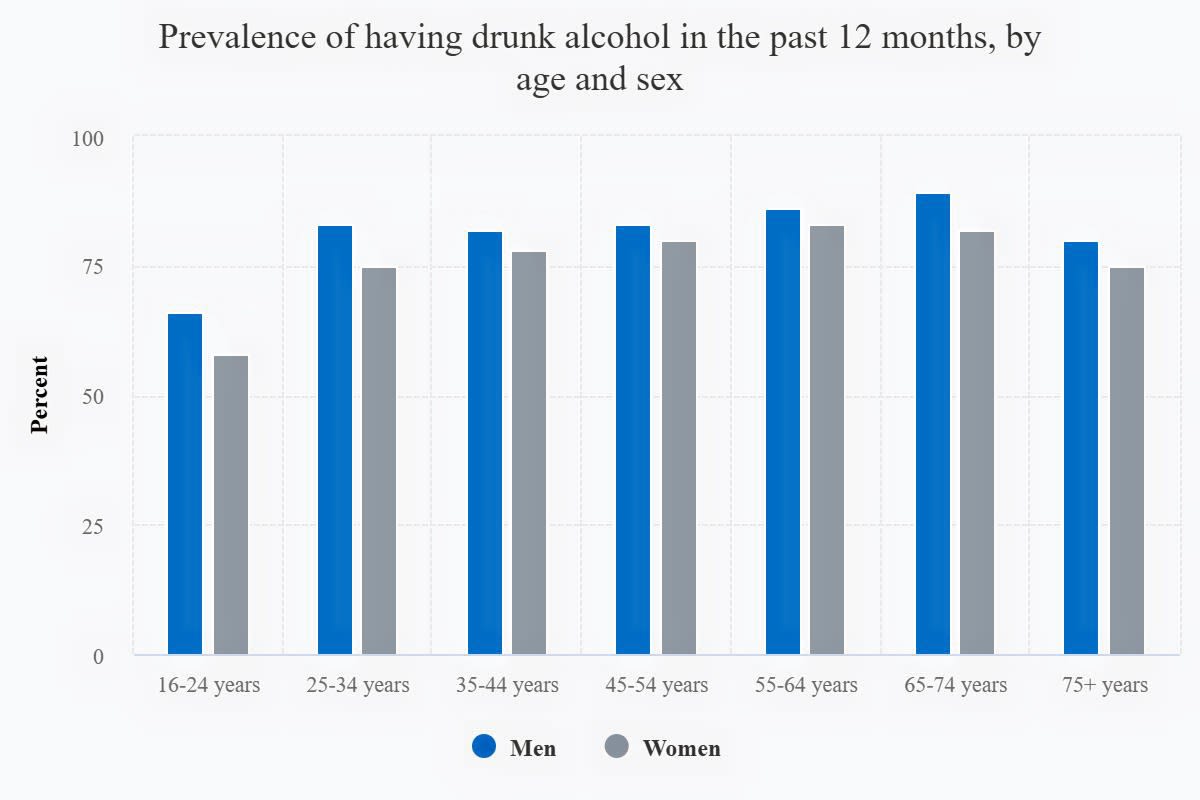
In England (2022), 25% of 16-24 year olds hadn't drunk in a year, the highest rate of any age group. Gen Z tend to drink less due to a stronger focus on health and wellbeing, as well as the cost-of-living crisis.
However, Gen Z spend the same proportion of their post-tax income on alcohol as their millennial counterparts, according to The Drinks Business.
Even though the bar sales are a major part of what profit these venues are making, Frisbee was clear how little margin Yellow Arches will actually make from selling a pint. He said: "If we were to maintain our profit margins over the last few years, we'd be charging seven or eight pounds for a pint. But who's going to buy one then?
"We're lucky here because we have such a diverse space that we've kept and expanded on."
"I know people in the industry who don't take a dividend, never mind a wage. They do it for the benefit of the music industry itself."
Yellow Arch Studios has an outside food court, where they serve on gig nights. Where the margins on food are higher, this allows Yellow Arches to counter act their loss leader gigs.
Frisbee continued: "Our gigs on Saturday night gig nights are going to be fewer and fewer. If we could host a wedding or another type of venue hire, this instead will give us the money we need to stay afloat."
So, what is being done to ensure the few venues left don't close their doors? The government have finally backed industry-wide calls for a voluntary ticket levy. A fee (often £1) is added for large arena/stadium shows. This money then goes to struggling grassroot venues through the LIVE trust.
The Arts Council England (ACE) have introduced a Supporting Grassroots Music campaign. This provides grants to venues, promoters, and festivals for business development.
In Sheffield, 15 grassroot venues have introduced the Sheffield Independent Venues Alliance (SIVA) to help defend the city’s musical future. The alliance means shared ideas, solutions, and a united voice that can campaign for support more powerfully than ever.
Similar alliances have been set up across other towns & cities in England, with grassroot venues having to take it upon themselves to save a working-class art. Despite some level of government intervention, it is clear to see it isn't enough with the amount of live music spaces closing for good.
What does this mean for bands?

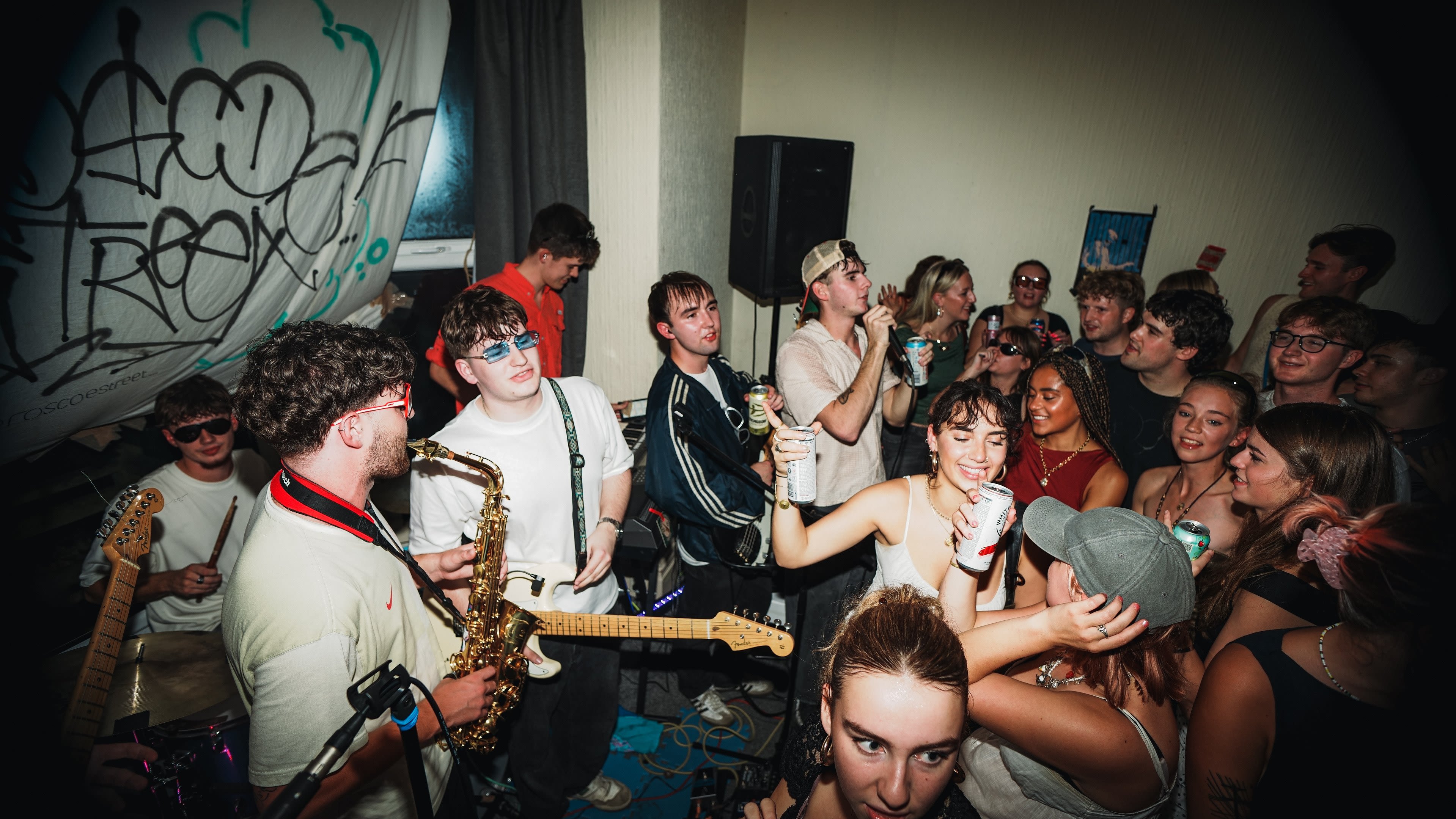
Inside the uphill battle today's bands face.
In the UK, less bands are in the charts than ever. In 2025, Oasis are the only band to consistently stay in the UK top 40 due to their blockbuster reunion.
So, what happened to bands?
As pop music began to favour electronic music and backing tracks, the need for a "band" became less important.
As well as this, being in a band is simply a burden financially for unsigned musicians, funding themselves.
Michael Adshead, the lead guitarist and songwriter of Sheffield band Sons of the City, said: "We’ve just finished making our first album as Sons of the City, and it’s cost us a small fortune to pull it together.
"With so many places closing, the opportunities for new bands to rehearse, grow, and actually get on a stage are getting fewer. If more grassroots venues had survived, we’d definitely have access to a wider and more varied crowd. "
Presenter and Content Creator Liam Walton said: "It's a lot easier for a solo artist that plugs a guitar into an amp to go and tour the UK than it is for five mates from a council estate who just want to make some tunes."
"If you're young, it is financially unsustainable to be in a band now - it doesn't make sense."
Again, it all links back to where young people get inspired. Without grassroots venues open that are intertwined in their communities, there may be nowhere for young people to find the talent they may never realise they had.
Walton continued: "There's 100% a proven correlation between there being less grassroots venues and less young British musicians coming through the ranks. This is the case as there is nowhere for these people to hone their craft.
"These spaces don't exist nearly as frequently as before. It simply results in less people having a go at it."
The pain felt in places like Sheffield, where musical heritage runs deep, doesn't show business mismanagement, instead reflects a wider political and cultural crisis. If venues keep closing, we will lose the vibrant, diverse musical landscape that has defined British cultural fabric for decades. Will we react before the music stops, or press pause on a part of our identity?




 Built with Shorthand